What causes tartar and how can you prevent it? Why some people build it up faster
Tartar forms when the bacterial layer on the teeth (plaque) hardens with calcium and phosphate minerals in saliva; plaque that is not cleaned away can start to harden within a few days. It collects most behind the lower front teeth and on the cheek side of the upper molars, where the salivary glands open. Regular brushing and cleaning between the teeth can reduce tartar noticeably, but once tartar has formed a toothbrush cannot remove it. How quickly it builds up varies from person to person.
How does tartar form?
- After eating, a soft, sticky layer of bacteria and food debris (plaque) builds up on the teeth.
- If plaque is not removed by brushing and flossing, minerals in saliva start to settle into it.
- Within a few days the plaque begins to harden and over time becomes tartar (calculus) that sticks firmly to the tooth.
- Its rough surface makes it easier for new plaque to stick, so the build-up feeds itself.
Tartar above the gum line is usually yellowish or whitish; tartar below the gum line can be darker and is more closely linked with gum disease.
Why does it collect behind the lower front teeth?
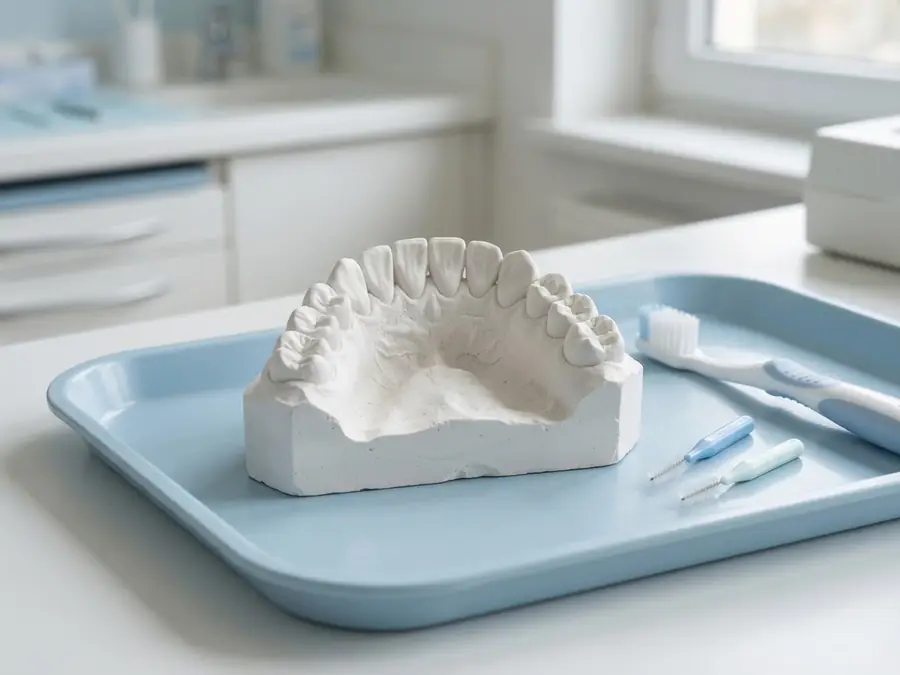
The places where the salivary glands open into the mouth have the highest concentration of minerals. The glands under the tongue sit behind the lower front teeth, and the glands in the cheeks are close to the outer surfaces of the upper molars. That is why tartar is most often seen there. These are also surfaces that are easy to miss when brushing.
Why do some people build up tartar faster?
 Dr. Hüseyin AşcıFounding dentist, Dent32 Beylikdüzü
Some of our patients build up tartar faster even with the same care; the make-up of their saliva plays a part. For them, a shorter interval between cleans and brushing focused on the back of the lower front teeth, where tartar collects most, can make a difference.
Graduate of Istanbul University Faculty of Dentistry; works mainly on implants, All-on-4 and All-on-6, zirconia crowns and veneers. About Dr. Hüseyin Aşcı
| Factor | Effect |
|---|---|
| Saliva composition | Mineral-rich saliva can make plaque harden faster |
| Brushing and interdental cleaning | Plaque collects in missed areas and turns into tartar |
| Smoking | Can increase tartar build-up and staining; see smoking and your teeth |
| Crowded teeth | Hard-to-clean areas tend to collect tartar |
| Dry mouth | Saliva's cleansing effect is reduced; see dry mouth |
| Braces, bridges, implants | More surfaces for plaque to cling to |
Which of these matters most varies from patient to patient, which is why two people with the same routine can build up very different amounts of tartar.
How can you prevent tartar?
- Brush twice a day for at least two minutes. Pay particular attention to the back of the lower front teeth and the cheek side of the molars. See how to brush properly.
- Clean between your teeth once a day with floss or interdental brushes; tartar often starts between the teeth.
- Use a fluoride toothpaste. Some toothpastes contain ingredients that may help slow tartar formation, but they do not remove existing tartar.
- Limit sugary and sticky snacks and drink water during the day.
- An electric toothbrush can make plaque control easier for some people; see electric toothbrushes.
- Keep up regular check-ups and cleans.
Can tartar be removed at home?
No. Hardened tartar does not come off with a toothbrush, baking soda or lemon. Scraping with a metal tool can damage the gums and enamel, and abrasive or acidic substances such as baking soda and lemon can wear the enamel. See home whitening with baking soda and lemon.
Tartar is removed with the dentist's ultrasonic instruments without harming the enamel; for more see does scaling damage teeth.
Why does tartar need to be removed?
It is not the tartar itself but the bacteria living on and under it that inflame the gums. Over time, tartar that is left in place can lead to bleeding gums, bad breath, gum recession and, in more advanced cases, loss of the bone supporting the teeth. See bleeding and receding gums.
How often you need a clean varies from patient to patient; for most people a check-up every 6 or 12 months may be enough.
Dent32 is at Barış Mah., Ginza Lavinya, E-5 Yanyolu No:30 D:179, 34520 Beylikdüzü, Istanbul and is open Monday to Saturday, 9:00–22:00. To book, call or WhatsApp +90 555 011 33 68, or use our contact page. At the examination we share the findings, the options and the approximate cost in writing; you are under no obligation to start treatment afterwards.
Frequently asked questions
How many days does it take for tartar to form?
Plaque that is not cleaned away can start to harden within a few days. The speed varies from person to person depending on saliva and oral care.
Why does tartar form behind the lower front teeth?
The salivary glands under the tongue open there and the mineral concentration is high, so tartar collects there most.
Is there a toothpaste that prevents tartar?
Some toothpastes contain ingredients that may help slow tartar formation. They do not remove existing tartar; regular brushing and interdental cleaning are what really prevent it.
Can tartar fall off by itself?
Small pieces sometimes break off, but tartar does not go away on its own. What remains keeps irritating the gums, so a professional clean is needed.