Whitening teeth at home: is baking soda, lemon, vinegar or hydrogen peroxide harmful?
Most home whitening methods don't lighten the tooth's own colour; at best they reduce surface stains from tea, coffee and smoking. Acidic methods such as lemon, vinegar and strawberries wear away enamel and can make teeth look more yellow over time. Baking soda in toothpaste is low in abrasiveness and helps with surface stains, but using it neat, often and hard isn't recommended. The safe way to lighten tooth colour is home or in-clinic whitening supervised by a dentist.
How safe are home methods?
| Method | Does it work? | Risk |
|---|---|---|
| Baking soda (baking soda toothpaste) | Can reduce surface stains | Abrasion if used neat and often; contains no fluoride |
| Lemon, vinegar, apple cider vinegar | No | Acid wears enamel and causes sensitivity; the damage is permanent |
| Lemon + baking soda | No | Acid and abrasive together; one of the most harmful combinations |
| Hydrogen peroxide from the chemist | Limited when used without supervision | Gum irritation and burns, sensitivity |
| Activated charcoal | Limited, for surface stains | Can be abrasive; contains no fluoride |
| Strawberries, turmeric, coconut oil | No evidence | The acid in strawberries can soften enamel |
Is whitening with baking soda harmful?
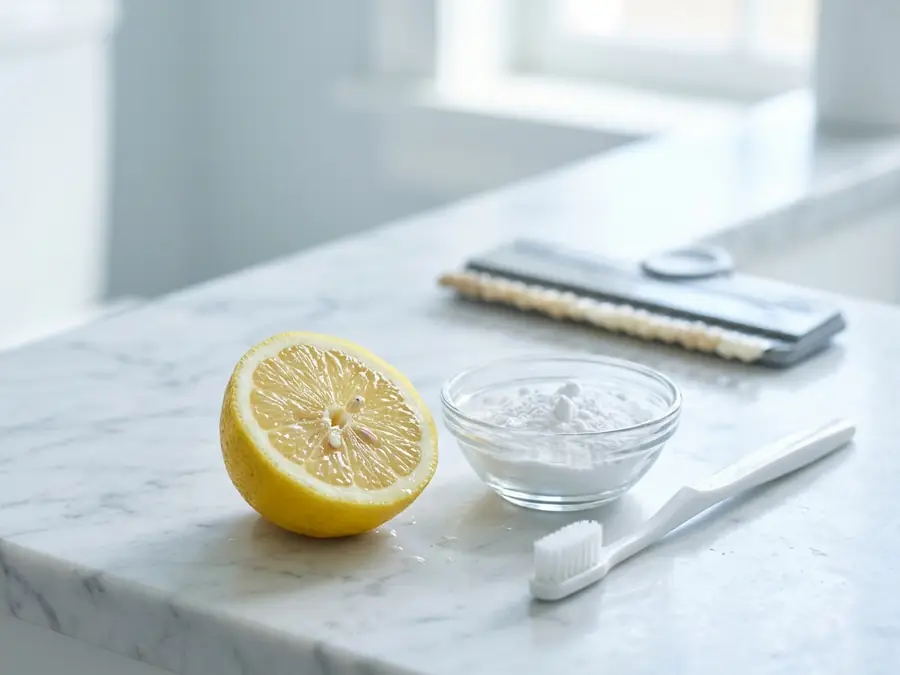
Baking soda (sodium bicarbonate) is a mild abrasive. Toothpastes containing it are low in abrasiveness and have been shown to reduce surface stains. The problem is pouring neat baking soda onto a brush and scrubbing hard every day: this can increase wear and sensitivity, especially in people with receding gums and exposed roots. Neat baking soda also contains no fluoride, so it can't replace toothpaste.
If you want to try baking soda, use it once or twice a week alongside your fluoride toothpaste, with a soft brush and without pressing hard. Never mix it with anything acidic (lemon, vinegar).
Why do lemon and vinegar make teeth look more yellow?
Enamel softens on contact with acid and is then worn away by brushing. As enamel thins, more of the yellowish dentine beneath shows through, so acidic methods can make teeth look more yellow over time. This wear can't be reversed and causes sensitivity. We explain the effects of acid and wear in dental erosion and enamel wear.
Can you whiten teeth with hydrogen peroxide?
The ingredient that actually lightens tooth colour is hydrogen peroxide or related compounds, which are also in professional whitening gels. But the concentration, the application time and protecting the gums all matter. Under cosmetics rules in the European Union and Turkey, oral products sold over the counter may contain no more than 0.1% hydrogen peroxide; higher concentrations are used after an examination and under a dentist's supervision. Holding chemist's hydrogen peroxide in your mouth or putting it on a toothbrush can irritate and burn the gums and make teeth sensitive.
What you can safely do at home
- Brush twice a day with fluoride toothpaste; whitening toothpastes can reduce surface stains. See whitening and charcoal toothpaste.
- Rinse with water after tea, coffee and cola; drink through a straw where possible.
- Stop or cut down smoking; it causes some of the most stubborn stains.
- Have a scale and polish every six months; for many people teeth look noticeably lighter. See scale and polish.
- Home whitening with custom trays made by a dentist and a low-concentration gel is the genuine whitening method that can be used safely at home.
We explain why teeth turn yellow in why do teeth turn yellow?, and professional whitening in the clinic and at home in teeth whitening.
Why is an examination needed before whitening?
- Decay and exposed root surfaces can cause severe sensitivity during whitening; they're treated first.
- Fillings, crowns and veneers don't change colour with whitening, so a colour mismatch can appear on front teeth.
- Root-filled or darkened teeth may need a different method. See dead tooth.
- Whitening is usually postponed during pregnancy and breastfeeding.
- If you have sensitivity, it can be prepared for in advance. See tooth sensitivity.
Teeth whitening in Beylikdüzü
At Dent32 we check your teeth and gums before whitening, record your starting shade and explain which of the in-clinic or home options suits you. For the process, see teeth whitening in Beylikdüzü.
Dent32 is at Barış Mah., Ginza Lavinya, E-5 Yanyolu No:30 D:179, 34520 Beylikdüzü, Istanbul and is open seven days a week. To book, call or WhatsApp +90 555 011 33 68, or use our contact page. At the examination we share the findings, the options and the approximate cost in writing; you are under no obligation to start treatment afterwards.
Frequently asked questions
Does baking soda whiten teeth?
Baking soda doesn't lighten the tooth's own colour; it can reduce surface stains. Baking soda toothpastes are considered safe, but using neat baking soda often and hard can cause wear.
Does lemon whiten teeth?
No. The acid in lemon softens and wears enamel; as enamel thins, teeth can look more yellow and become sensitive. The damage can't be reversed.
Can I rinse with hydrogen peroxide?
Holding chemist's hydrogen peroxide in your mouth or putting it on a brush can irritate and burn the gums. Peroxide whitening should be done under a dentist's supervision with the right concentration and timing.
Is there a safe way to whiten teeth at home?
Yes: home whitening with custom trays made by a dentist and a suitable gel. Beyond that, whitening toothpaste, regular scale and polish and cutting down on staining habits help with surface stains.
Is charcoal whitening harmful?
Activated charcoal can reduce surface stains to a limited extent but can be abrasive, and most products contain no fluoride. Regular use isn't recommended.