

Treatments
For each treatment we explain what it is, who it suits and how it works. Timing and cost vary from person to person; after the examination you'll get a written plan made for you.
List of treatments
Dental implants
A titanium screw placed in the jawbone to replace a missing tooth, with a permanent tooth on top.
DetailsZirconia and porcelain crowns
Crowns that protect worn, broken or discoloured teeth and restore their appearance.
DetailsSmile design
A plan for the length, shape and colour of your teeth, based on your facial proportions, that you can see in advance.
DetailsClear aligner orthodontics
Straightening crowded or gapped teeth with removable clear aligners.
DetailsTeeth whitening
Dentist-supervised lightening that doesn't harm the enamel.
DetailsRoot canal treatment
Cleaning out an inflamed or infected nerve so the tooth can be kept.
DetailsChildren's dentistry
Preventive care from the first baby teeth, in a calm setting with child-friendly explanations.
DetailsGum treatment
Cleaning and periodontal treatment for bleeding, receding or inflamed gums.
DetailsDental implants
An implant is a small screw, usually made of titanium, that replaces a lost tooth root. Once it has fused with the bone, a crown, bridge or full-arch prosthesis is fixed on top. Its main advantage is replacing a missing tooth without touching the neighbouring teeth.
Before deciding on treatment, we assess bone volume and the distance to nerves and sinuses with a 3D CT scan. If bone is insufficient, additional procedures such as grafting or a sinus lift may be needed; we discuss these openly at the start. For patients missing all teeth in a jaw, fixed options on fewer implants, such as All-on-Four, are also considered.
Who is it for?
- People missing one or more teeth
- Denture wearers who want fixed teeth
- People whose general health allows minor surgery (uncontrolled diabetes and heavy smoking increase the risk)
How does it work?
- Examination, CT scan and planning
- Placing the implant under local anaesthetic
- Healing and bone integration
- Impressions and fitting the final tooth
- Regular check-ups and maintenance

Zirconia and porcelain crowns
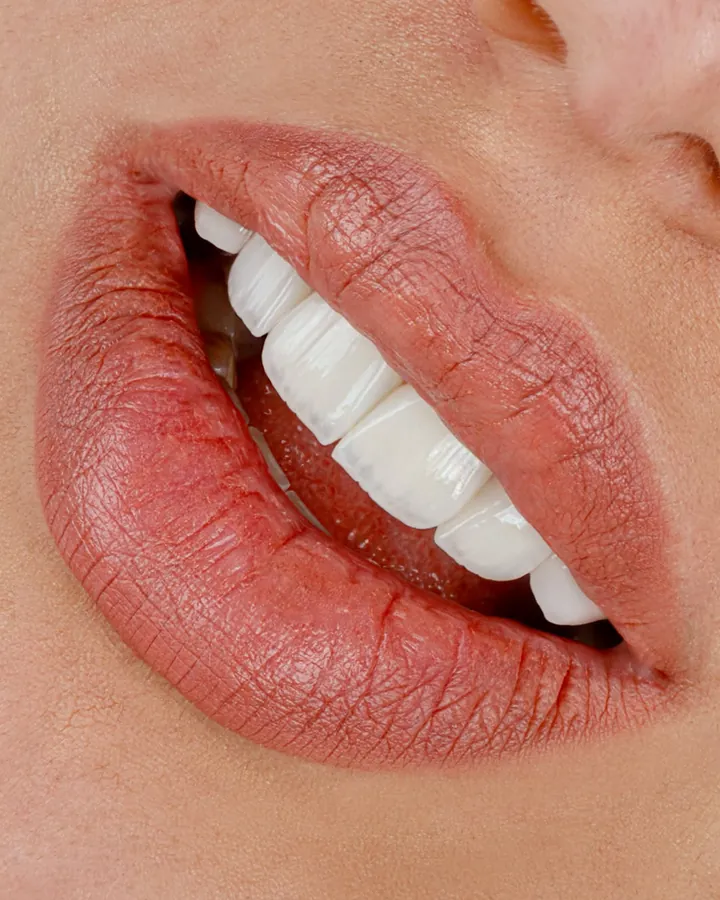
A crown is a restoration that surrounds a tooth and protects it. Because zirconia has no metal framework, it transmits light much like a natural tooth and doesn't leave a dark line at the gum. Porcelain-fused-to-metal is a durable option with a long track record, especially for back teeth.
A laminate veneer is a thin layer bonded only to the front surface of the tooth, so less tooth tissue is removed. Which option suits you depends on how much sound tooth remains, your bite forces and your expectations.
Who is it for?
- Weakened, root-treated teeth
- Teeth with large fillings or fractures
- Colour or shape problems that whitening can't fix
How does it work?
- Examination and X-rays if needed
- Tooth preparation and impressions (digital or conventional)
- Temporary teeth and try-in
- Cementing the final crowns
- Review

Smile design
Smile design is not a single procedure but a planning method. Your lip line, facial midline and gum level are examined using photos, video and intraoral scans, and the intended result is designed digitally.
The design is tried in your mouth with a temporary mock-up, so you see the result in the mirror before anything permanent is done. The plan may include one or more treatments such as whitening, orthodontics, gum contouring, veneers or zirconia.
Who is it for?
- People unhappy with the length, shape or spacing of their teeth
- Those who want to address several aesthetic concerns in one plan
- Those who want to see the result before starting
How does it work?
- Photos, scan and discussing expectations
- Digital design
- Trial with a temporary mock-up
- Treatment according to the approved plan
- Review and maintenance advice

Clear aligner orthodontics
With clear aligners, teeth are moved step by step using thin, custom-made aligners that are replaced with new ones at set intervals. They are removed for eating and brushing and need to be worn for most of the day.
Not every case suits aligners. For some skeletal problems or complex tooth movements, fixed braces give more predictable results. As orthodontics is Dr. Hüseyin Aşçı's field, we compare both methods after the examination before recommending one.
Who is it for?
- People with mild to moderate crowding or gaps
- Those who can wear aligners for the recommended hours each day
- Adults and teenagers who don't want visible braces
How does it work?
- Examination, X-rays and intraoral scan
- Digital movement plan
- Handing over the aligners and explaining their use
- Regular check-ups
- Retention phase
Teeth whitening
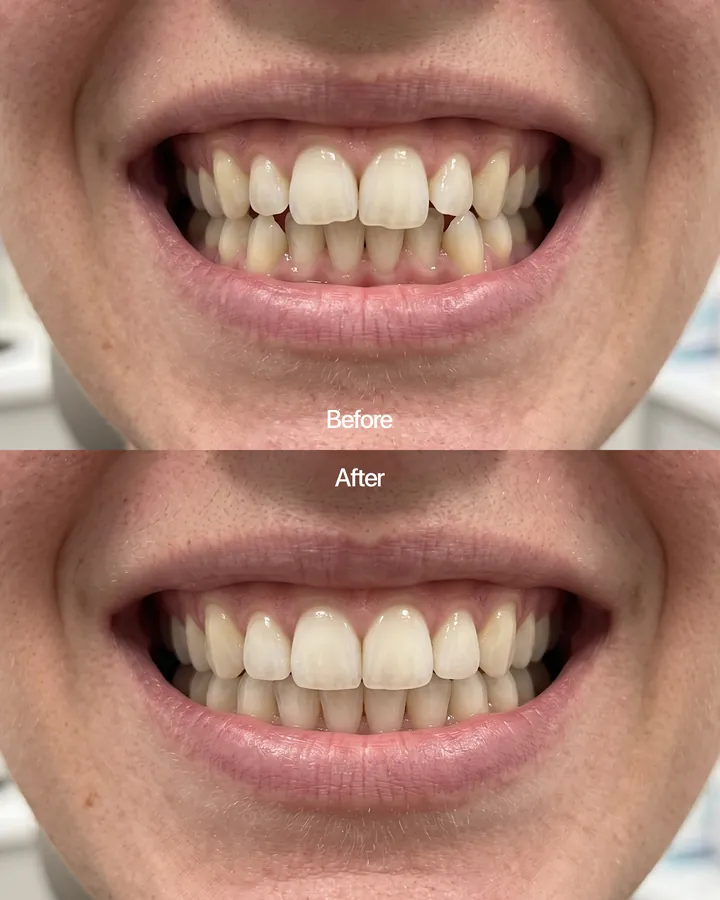
Whitening lightens stains on and within the teeth using peroxide-based gels. In the clinic, a higher-concentration gel is used with the gums protected; at home, a lower-concentration gel is used in custom-made trays.
Restorations such as crowns, fillings and veneers don't whiten, so we assess your existing fillings first. Temporary sensitivity is common and usually settles on its own. How long the result lasts depends on habits such as tea, coffee and smoking.
Who is it for?
- People with yellowing or general darkening of natural teeth
- Those whose decay and gum problems have been treated
- Best postponed during pregnancy and breastfeeding
How does it work?
- Examination and scale-and-polish
- Recording the starting shade
- In-clinic or at-home application
- Shade check and maintenance advice
Root canal treatment
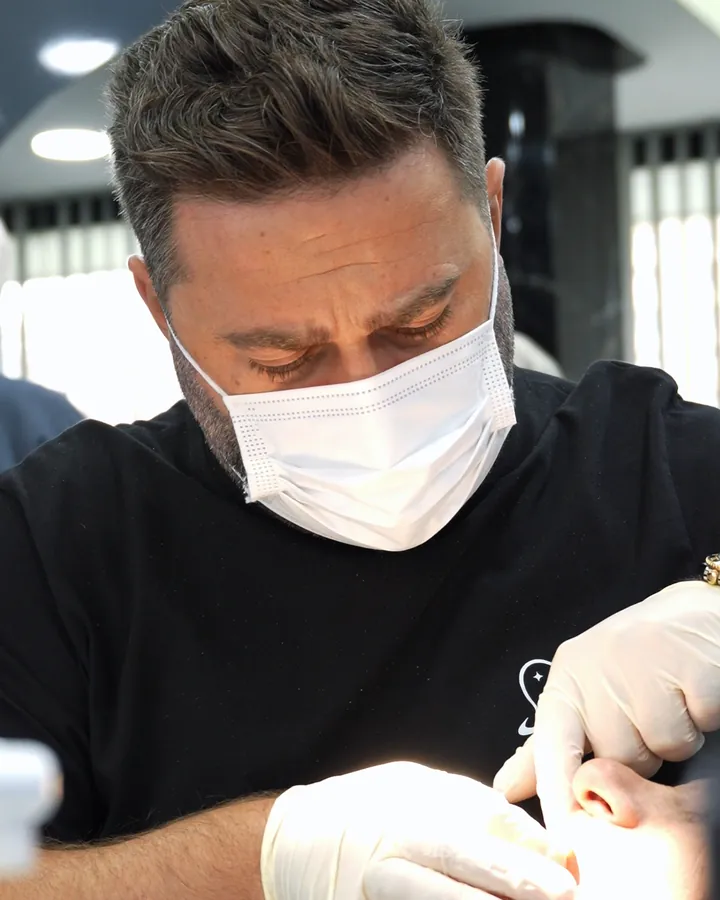
When decay or trauma reaches the pulp, the nerve tissue can become inflamed. In root canal treatment this tissue is removed, the canals are shaped and disinfected, and then sealed with a filling material. The aim is to save the tooth rather than extract it.
The procedure is done under local anaesthetic, and most patients feel no significant pain during treatment. Because root-treated teeth can become brittle over time, a crown is often recommended, especially for back teeth.
Who is it for?
- People with lingering sensitivity to hot and cold, or night-time pain
- Those with an abscess or swelling
- Teeth showing inflammation at the root tip on X-ray
How does it work?
- Examination and X-ray
- Local anaesthetic and cleaning the canals
- Filling the canals
- Restoring the tooth with a filling or crown
- Follow-up X-ray
Children's dentistry
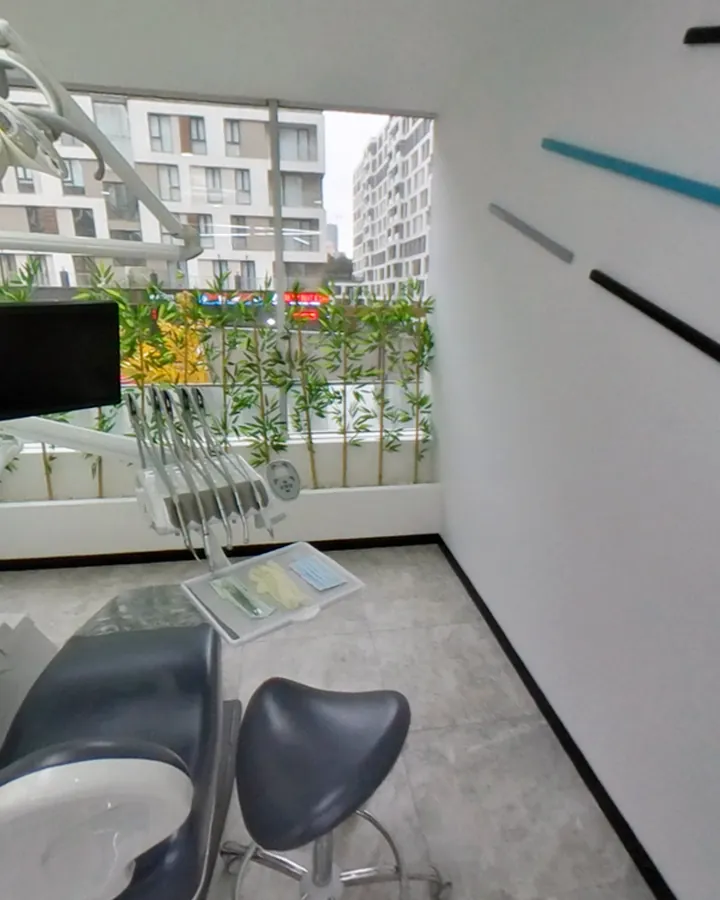
A child's first dental experience shapes how they feel about treatment later on. So in the first appointments we take our time, introduce the room and show the instruments as we explain. Our clinic has a treatment room designed especially for children.
We focus on preventing decay before it starts, with fissure sealants, fluoride and regular check-ups. Decay in baby teeth should be treated too: baby teeth lost early can affect how the permanent teeth come in.
Who is it for?
- A first check-up once the first tooth appears
- Children with baby or mixed teeth
- Children who feel anxious about the dentist
How does it work?
- Getting to know each other and a check-up
- A care plan together with parents
- Preventive care or treatment
- Regular check-up appointments

Gum treatment
Gum disease often starts without pain: bleeding when brushing, bad breath and red gums are the first signs. Left untreated, the bone supporting the teeth can be lost over time and teeth start to loosen.
Treatment begins with removing tartar and smoothing the root surfaces. Advanced cases may need periodontal surgery. Healthy gums are also a prerequisite for successful implant, crown and orthodontic treatment.
Who is it for?
- People whose gums bleed when brushing
- Those who notice gum recession or loose teeth
- Patients who need a gum check before implant or aesthetic treatment
How does it work?
- Gum measurements and X-rays
- Scaling and root planing
- Home-care coaching
- Re-assessment and further treatment if needed
- Regular maintenance visits
Next step
Let's talk first, then plan.
Message us on WhatsApp or book an appointment. In the first conversation we listen to you, and after the examination we explain the options with their pros and cons. There's no rush to start treatment.
- A thorough examination and any imaging needed
- Options, risks and alternatives explained clearly
- An itemised written treatment plan and cost
- Follow-up appointments after treatment