A pimple-like bump on the gum (dental fistula): causes, should you pop it, how it heals
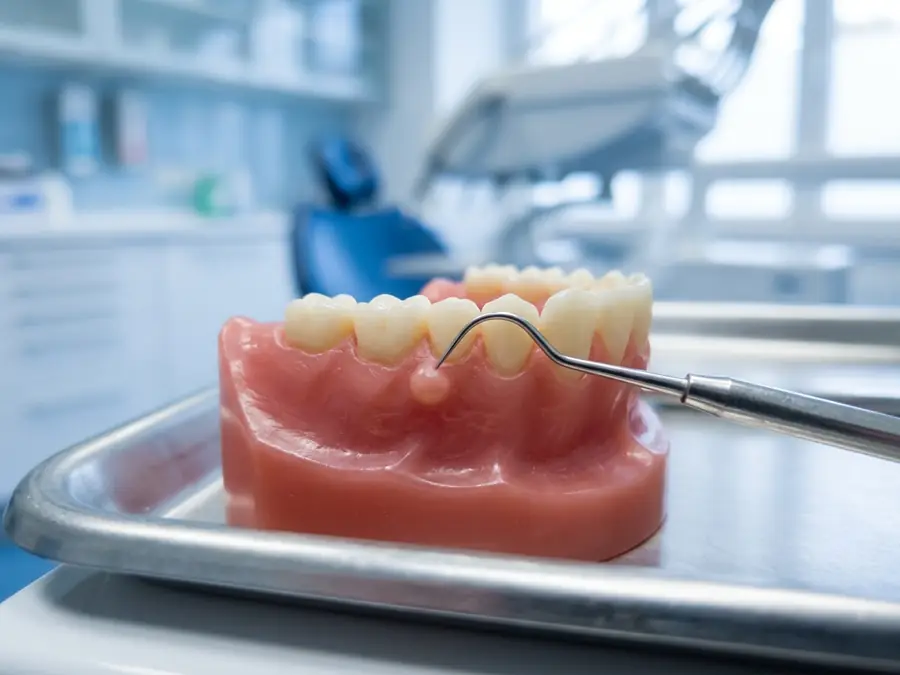
A small, pimple-like bump on the gum, usually level with a tooth's root, is most often a fistula (sinus tract). It's a drainage channel created by inflammation collecting at the root tip or in a gum pocket. Because the pus drains through it, it often doesn't hurt; the bump goes down and comes back a few days later. No pain doesn't mean the problem has gone: until the source is treated the fistula keeps returning and bone loss can progress.
Causes of a fistula
- A dead nerve and root-tip infection: The most common cause. The nerve dies after deep decay, old large fillings or a knock. See tooth cysts and root-tip inflammation.
- A failed or incomplete root canal: A previously root-filled tooth can also develop a fistula. See root canal retreatment.
- A gum pocket abscess: In advanced gum disease, pus can collect in deep pockets. See gum pockets.
- A root crack: Cracks running down the root can cause a fistula too. See cracked tooth.
- Inflammation around an implant: A similar bump can appear next to an implant. See implant lifespan and peri-implantitis.
Fistula or another kind of sore?
| Sign | Fistula | Mouth ulcer | Cold sore |
|---|---|---|---|
| Appearance | Pimple-like bump on the gum | Sore with a white-yellow base and red rim | Small blisters at the edge of the lip |
| Discharge | Pus or a salty taste when pressed | None | Blisters burst and crust |
| Course | Goes down and returns in the same place | Heals in 7–14 days | Heals in 7–10 days |
| Source | An underlying tooth or gum problem | Immunity, stress, injury | A virus |
For ulcers and mouth sores, see mouth ulcers. Any sore that hasn't healed in two weeks should be examined; see signs of mouth cancer.
How it's diagnosed
The dentist first needs to find which tooth the fistula comes from; the bump doesn't always belong to the tooth right above it. Cold and tapping tests are done, gum pocket depths are measured and an X-ray is taken. If needed, a thin, X-ray-visible root canal filling cone is placed into the tract and an X-ray taken; the cone points to the source. In complex cases a CT scan helps. See dental X-rays and CT scans.
Treatment: removing the source
- Root canal treatment: For nerve-related fistulas, the tract usually closes within a few weeks once the source is cleaned.
- Retreatment or root-end surgery: For teeth that have been treated before.
- Gum treatment: Deep cleaning and, if needed, surgery for fistulas from gum pockets.
- Extraction: If there's a root crack or the tooth can't be saved. See extraction or root canal.
Antibiotics may calm the bump temporarily but don't treat the source; once the course ends, the fistula returns. See do antibiotics cure toothache.
What not to do
- Don't prick or squeeze the bump; you can spread the infection.
- Don't take antibiotics unless a dentist prescribes them.
- Don't postpone treatment just because it doesn't hurt.
- If you have facial swelling, fever, or difficulty swallowing or breathing, see a dentist or go to A&E without delay. See dental abscess.
Examination in Beylikdüzü
At Dent32 we find the source of the fistula with an examination and X-ray and explain the treatment options in writing. A fistula is usually not an emergency, but it shouldn't be put off; you can send a photo on WhatsApp to book.
Dent32 Ağız ve Diş Sağlığı Polikliniği (Dent32 Dental Polyclinic) is at Barış Mah., Ginza Lavinya, E-5 Yanyolu No:30 D:179, 34520 Beylikdüzü, Istanbul and is open seven days a week. To book, call or WhatsApp +90 555 011 33 68, or use our contact page. At the examination we share the findings, the options and the approximate cost in writing; you are under no obligation to start treatment afterwards.
For clinic details, our dentists and the full list of treatments, visit Dent32, dental clinic in Beylikdüzü.
Frequently asked questions
Will a pimple on the gum go away by itself?
The bump goes down but usually returns in the same place. It won't go away for good until the underlying tooth or gum infection is treated.
Is a fistula dangerous if it doesn't hurt?
Because the infection drains through the fistula, there may be no pain; but the infection continues and can keep destroying the surrounding bone. No pain is no reason to delay treatment.
When does a fistula close after root canal treatment?
Usually within a few days to a few weeks. If it doesn't, the dentist reassesses the source.