How long do dental implants last? What affects their lifespan, and peri-implantitis
Well-planned, well-maintained implants last for many years in most patients, often for life; studies report that the large majority (around 90–95%) are still functioning after 10 years. The crown on top may need replacing over time because of wear. The biggest threat to long-term success is peri-implantitis, inflammation around the implant.
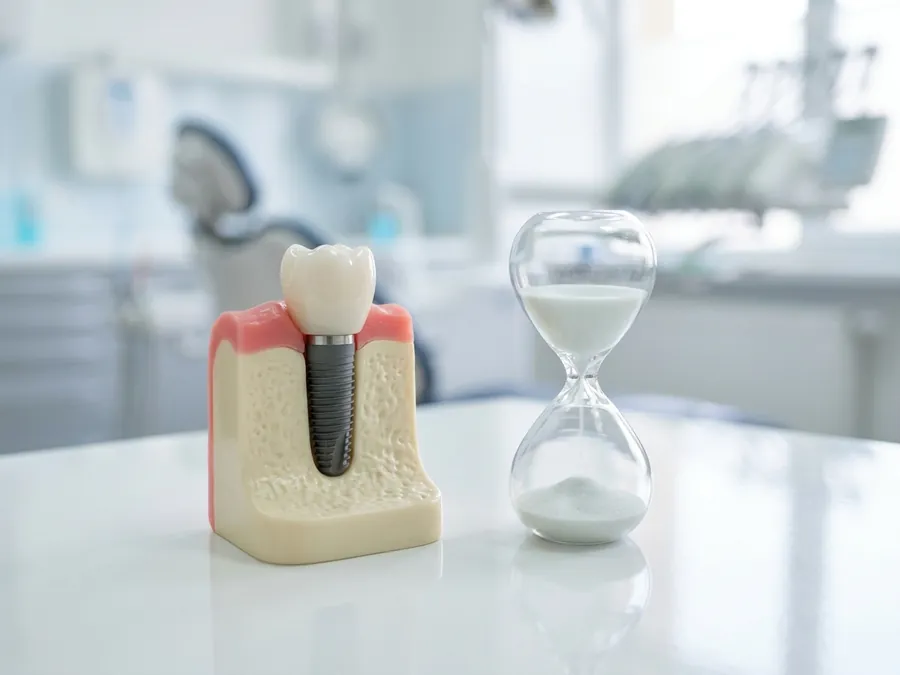
The implant and the tooth on top don't have the same lifespan
| Part | What to expect | What shortens it |
|---|---|---|
| Implant (the screw in the bone) | Once integrated, and with continued care, usually many years | Peri-implantitis, smoking, uncontrolled diabetes |
| Abutment and screw | Long-lasting; occasional loosening | Excessive biting force, clenching |
| Crown or bridge | Many years depending on material; may be renewed in time | Clenching, biting hard objects, fracture |
What determines lifespan
- Planning: Implants placed at the right length and position using a CT scan transfer forces evenly to the bone.
- Bone and gum: Enough bone and healthy, thick gum around the implant improve long-term success.
- Smoking: Impairs integration and healing, and clearly increases the risk of peri-implantitis.
- Diabetes: Well-controlled diabetes isn't a barrier; poorly controlled blood sugar speeds up inflammation.
- History of gum disease: People who lost teeth to gum disease get inflammation around implants more often, so regular maintenance matters even more.
- Clenching: Can lead to fractured crowns and loose screws; a night guard is recommended.
- A quality system: Choose implant brands with strong clinical evidence and parts that will still be available years later.
What is peri-implantitis, and how do you spot it?
Peri-implantitis is plaque-related inflammation of the gum and bone around an implant. It starts with a reversible stage affecting only the gum (peri-implant mucositis); if untreated, the bone supporting the implant begins to break down. Because it's often painless, it can go unnoticed without regular check-ups.
- Bleeding around the implant when brushing
- Redness, swelling or discharge from the gum
- Gum receding around the implant, with metal showing
- A bad taste or smell
- Movement of the implant at an advanced stage
At an early stage it can be treated with professional cleaning and better home care; advanced stages may need surgical treatment.
Care that helps implants last
- Brush twice a day with a soft brush and fluoride toothpaste
- Clean around the implant with an interdental brush, implant floss or a water flosser
- Have a check-up and professional clean at least once or twice a year; more often if you have a history of gum disease
- Have the bone level monitored with check-up X-rays at intervals
- Stop or cut down smoking
- Wear a night guard if you clench
We explain the first days in dental implant aftercare and the whole process in dental implants in Beylikdüzü.
Implant follow-up at Dent32
Implant treatment isn't finished when the crown goes in. Afterwards, we set your check-up intervals and, at each visit, monitor gum health, your bite and, when needed, the bone level on X-rays. You're also welcome to come to us for check-ups on implants placed elsewhere; if you know the brand, mention it when booking.
To book: +90 555 011 33 68 (WhatsApp and phone). Dent32 is a dental clinic on the E-5 service road in Beylikdüzü, open every day including weekends.
Frequently asked questions
Do dental implants last for life?
Most well-planned, well-maintained implants last for many years, often for life. The crown on top may need replacing in time.
Can implants decay?
Implants don't decay, but the gum and bone around them can become inflamed because of plaque (peri-implantitis).
Can the body reject an implant?
True titanium allergy is very rare. Implants are usually lost because they fail to integrate or because of peri-implantitis.
What should I do if my implant bleeds?
Bleeding may be the first sign of inflammation around the implant. It's easier to treat early, so come in for a check.
Does smoking affect how long implants last?
Yes. Smoking impairs integration and increases the risk of peri-implantitis; stopping helps implants last longer.