
What are inlays and onlays? The option between a filling and a crown: who needs one and how long it lasts
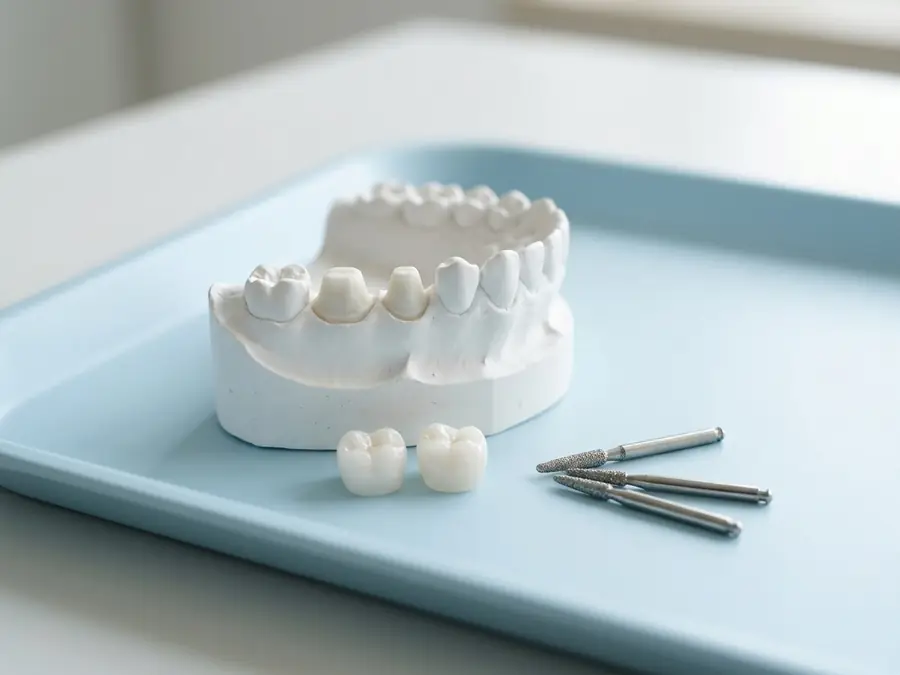
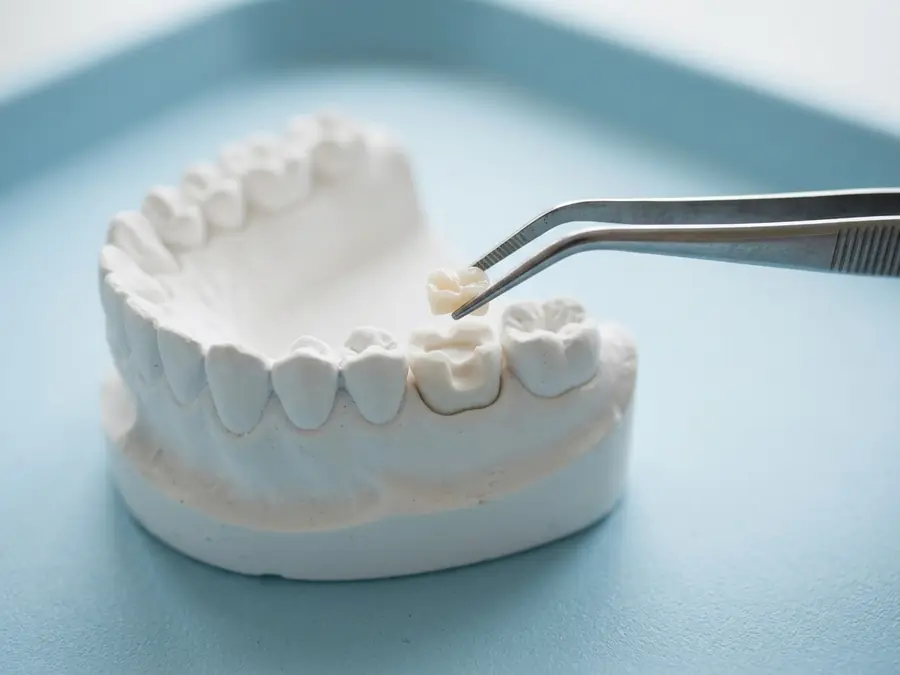
Inlays and onlays, unlike fillings shaped directly in the mouth, are pieces made in a laboratory from an impression or digital scan and then bonded to the tooth; they are sometimes called “porcelain fillings”. An inlay fills the space between the cusps (the raised points of the tooth), while an onlay also covers one or more cusps from above. They are mostly used on back teeth, for damage that is too large for an ordinary filling but too early for a full crown. Less sound tooth is removed than for a full crown.
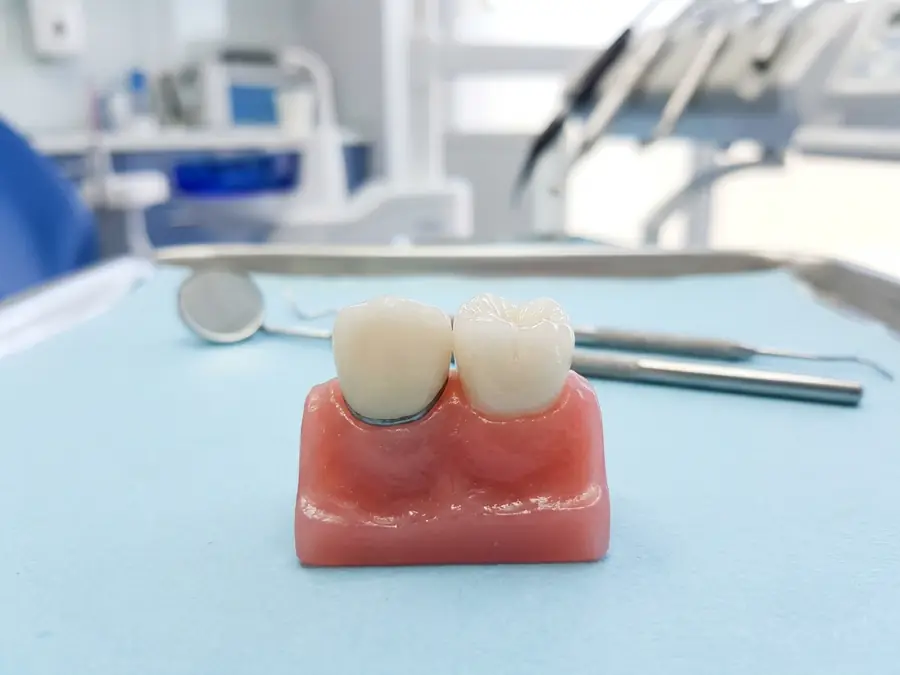
Inlay, onlay and crown: the difference
| Option | How much it covers | Sound tooth removed |
|---|---|---|
| Composite filling | Only the cavity; shaped in the mouth | Least |
| Inlay | The space between the cusps; made in a lab | Little |
| Onlay | The cavity plus one or more cusps | Little to moderate |
| Full crown | The whole visible surface of the tooth | Most |
Who are inlays and onlays for?
- A large cavity or a big, worn filling in a molar or premolar,
- A cusp that has broken or is at risk of cracking,
- A root-filled back tooth whose walls are still strong enough (see do you need a crown after a root canal),
- A large cavity found when replacing an old amalgam filling (see should amalgam fillings be removed),
- When the aim is to keep sound tooth and put off a crown for as long as possible.
If the loss is very large, extends below the gum or much of the tooth is cracked, a full crown may be more suitable. For small cavities, a single-visit white (composite) filling is enough.
What are they made of?
- Glass ceramic (such as e.max): light transmission and colour close to natural teeth; one of the most widely used options today. We cover it in what is an e.max crown.
- Zirconia: very strong; may be chosen for people who grind their teeth and areas with heavy biting forces.
- Laboratory composite: denser and tougher than a filling placed in the mouth, and easier to repair than ceramic.
- Gold alloy: known for longevity but rarely chosen today because of its colour.
How many visits does it take?
- The old filling and decay are removed and the tooth is shaped for an inlay or onlay.
- An impression or a digital scan of the tooth is taken with an intraoral scanner.
- A temporary filling protects the tooth while the piece is made.
- At the second visit the piece is tried in; once fit, colour and bite are checked, it is bonded with a special adhesive.
The process is usually completed in two visits. You can see how digital impressions are taken in digital dentistry at Dent32, and read about the temporary phase in how long a temporary filling lasts.
How long do inlays and onlays last?
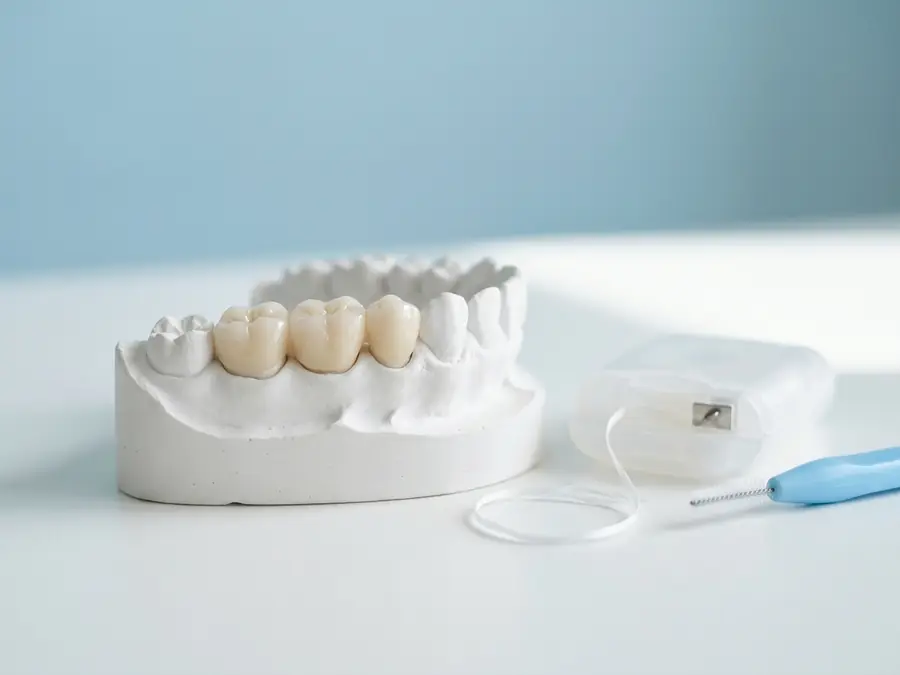
Long-term studies of ceramic inlays and onlays report that most restorations are still in place after ten years or more. The main factors are how much tooth is left, the bonding technique, grinding and oral hygiene. Flossing and regular check-ups matter so that new decay doesn’t form at the edges; we explain the technique in how to floss. If you grind your teeth at night, a night guard lowers the risk of the piece breaking.
Advantages and limits
- Advantages: more sound tooth is kept; more resistant to wear and staining than large fillings; the fit between tooth and piece is finely adjusted in the lab.
- Limits: takes more time than a single-visit filling; not suitable for every tooth; a full crown may be needed if the loss is very large.
- Cost: higher than a composite filling and close to or slightly below a full crown, depending on the material and the tooth.
Inlays and onlays at Dent32 in Beylikdüzü
At the examination we look at how much of the tooth is lost and explain the filling, inlay, onlay and crown options with their pros and cons, set out in a written treatment plan. To compare crown types, see types of dental crowns.
Dent32 is at Barış Mah., Ginza Lavinya, E-5 Yanyolu No:30 D:179, 34520 Beylikdüzü, Istanbul and is open Monday to Saturday, 9:00–22:00. To book, call or WhatsApp +90 555 011 33 68, or use our contact page. At the examination we share the findings, the options and the approximate cost in writing; you are under no obligation to start treatment afterwards.
Frequently asked questions
What is the difference between an inlay and an onlay?
An inlay fills only the space between the cusps of the tooth. An onlay also covers one or more cusps from above, protecting weakened walls.
Is a porcelain filling the same as an inlay?
When people say “porcelain filling” they usually mean a ceramic inlay or onlay. A white filling shaped in the mouth is a composite filling.
Is an inlay better than a crown?
It depends on how much tooth is lost. On a tooth with strong enough walls, an inlay or onlay protects it while removing less tooth; if the loss is very large or the tooth is cracked, a full crown may be needed.
How many visits do inlays and onlays take?
Usually two: the tooth is prepared and an impression taken at the first, and the piece is bonded at the second. A temporary filling protects the tooth in between.
Is sensitivity normal after an inlay?
Mild sensitivity to cold in the first days can happen and usually settles on its own. Pain when biting or sensitivity that persists should be checked.