Do you need a crown after a root canal? Why root-filled teeth break and when a filling is enough
Root canal treatment clears infection from inside a tooth, but it doesn’t strengthen the tooth from the outside. Decay, old fillings and the access opening made to reach the canals remove a good part of the tooth, so molars and premolars in particular often need a crown or onlay covering the top of the tooth after treatment. Front teeth with little tooth loss can usually be restored with a well-placed filling. The decision depends on where the tooth is and how much sound tooth is left.
Why do root-filled teeth break more easily?
Most teeth that need root canal treatment have already had a large cavity, a deep filling or a crack. During treatment an opening is made through the top of the tooth to reach the canals. As a result, the cusps (the raised points of the biting surface) can be left as thin walls.
Back teeth carry most of the chewing load. Thin walls can crack on a hard mouthful or when you clench at night. If a fracture runs below the gum line, the tooth may not be saveable, so the aim is to protect the tooth before it breaks. A root-filled tooth can also darken over time; we cover this in dead teeth and discolouration.
What is usually done for which tooth?
| Situation | Usual restoration |
|---|---|
| Front tooth, small access cavity only | Composite (white) filling |
| Front tooth with a large filling or discolouration | Crown or veneer; internal whitening if needed |
| Premolar with sound walls | Onlay or crown; sometimes a filling |
| Molar | Usually an onlay or full crown |
| Most of the tooth is missing | Fibre post (support inside the root) + crown |
Filling, onlay or crown: what’s the difference?
- Composite filling: Closes the access cavity and small defects in one visit. It can be enough for front teeth and premolars with sound walls. See white (composite) fillings.
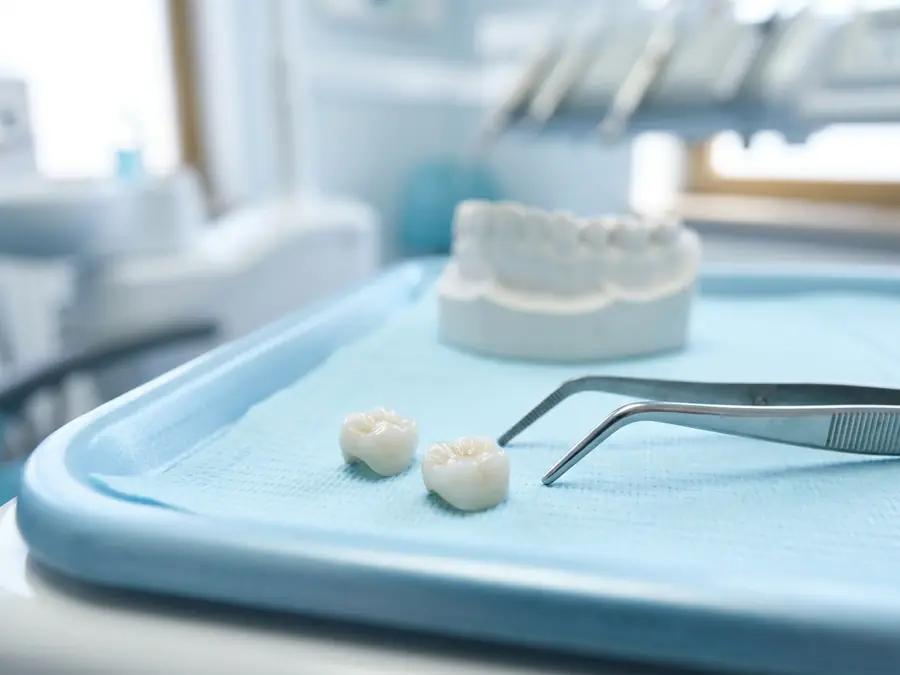
- Onlay (partial crown): A piece made in the laboratory or digitally that covers only the weak cusps. Sound parts of the tooth are not cut away, so it preserves more tooth than a full crown.
- Full crown: Covers the whole visible part of the tooth. It is chosen when tooth loss is large or the tooth has cracked before. Zirconia and e.max are the most common options; we compare them in types of dental crowns.
- Fibre post: If very little of the tooth is left above the gum, a post placed in part of the root canal gives the filling and crown something to hold on to. Not every root-filled tooth needs one.
When should the permanent filling or crown be placed?
At the last root canal visit the tooth is usually sealed with a temporary filling. Temporary fillings wear and can leak over time; if bacteria in saliva get back into the cleaned canals, the success of the treatment is put at risk. That’s why the permanent filling or crown should be placed within the time your dentist gives you, often within a few weeks. We explain how long temporary fillings last in how long does a temporary filling last.
Until the crown is fitted, avoid chewing hard or sticky foods on that side. A few days of tenderness after treatment is normal; see pain after root canal treatment.
What happens if you don’t get a crown?
Not every root-filled tooth without a crown will break, but in back teeth the risk of fracture rises noticeably. Studies show that molars protected with a crown or onlay after root canal treatment stay in the mouth longer. If a vertical crack extends into the root, the tooth may need to come out, and more involved treatment such as an implant or bridge then becomes necessary. We explain how we decide in extraction or root canal treatment.
Making a root-filled tooth last
- Don’t put off the permanent filling or crown.
- If you clench or grind, wear a night guard. See teeth grinding and night guards.
- A root-filled tooth has no nerve sensation, so decay can progress without pain; regular check-ups and X-rays matter for that reason.
- Clean around the edges of the crown with floss or an interdental brush. See how to floss.
- Don’t bite very hard things such as nutshells, ice or fruit stones with a root-filled tooth.
Planning after root canal treatment at Dent32 in Beylikdüzü
At the end of root canal treatment we explain which restoration suits your tooth, based on how much tooth is left, and set out the options in a written treatment plan. You can read how long zirconia and e.max crowns take in how many days a zirconia crown takes.
Dent32 is at Barış Mah., Ginza Lavinya, E-5 Yanyolu No:30 D:179, 34520 Beylikdüzü, Istanbul and is open seven days a week. To book, call or WhatsApp +90 555 011 33 68, or use our contact page. At the examination we share the findings, the options and the approximate cost in writing; you are under no obligation to start treatment afterwards.
Frequently asked questions
Is a crown compulsory after root canal treatment?
Not for every tooth. For front teeth with little tooth loss a filling may be enough. Molars and premolars usually need an onlay or crown because of the chewing load.
How long after a root canal should the crown be placed?
Once the tooth has settled, within the time your dentist gives you, often within a few weeks. Leaving a temporary filling for a long time can let the canals become reinfected.
Zirconia or e.max for a root-filled tooth?
Both can be used. Zirconia is often chosen for back teeth because of its strength, and e.max for front teeth because of how it lets light through. Clenching habits and how much tooth is left also affect the choice.
How long does a root-filled tooth last?
With good root canal treatment and a timely permanent restoration, a root-filled tooth can last for many years. Its lifespan depends mainly on how much tooth is left, the restoration, clenching and whether new decay develops.
Why can a root-filled tooth decay without pain?
Because the nerve tissue has been removed, the tooth doesn’t react to cold, heat or sweet things. Decay can progress without pain, so regular check-ups are important.