
Can you strengthen tooth enamel? Does enamel grow back, and how fluoride and toothpastes help
Tooth enamel contains no living cells, so enamel that has chipped or worn away doesn't grow back. However, the surface of enamel loses and regains minerals every day, and you can tip that balance in your favour with fluoride, saliva and a sensible diet. Early mineral loss, which looks like chalky white spots, can be stopped this way and can even harden again. Enamel that has been lost can only be replaced with treatments such as fillings, bonding or crowns.
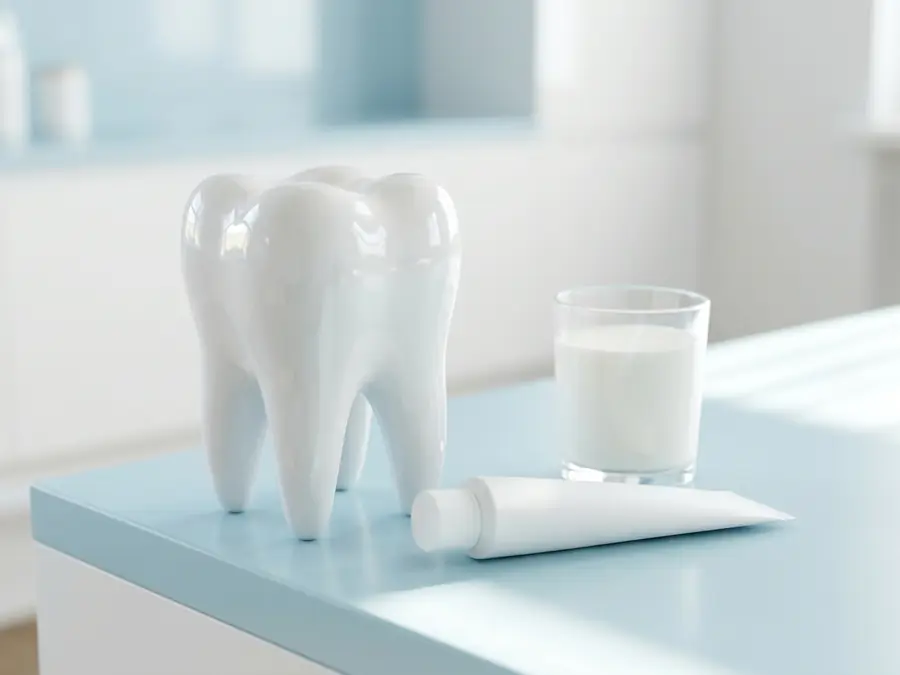
Enamel loses and regains minerals every day
When we eat or drink something sugary or acidic, acid in the mouth dissolves calcium and phosphate from the enamel (demineralisation). Within minutes to an hour, saliva neutralises the acid and returns those minerals to the enamel (remineralisation). Fluoride speeds up this process and makes the rebuilt surface more resistant to acid.
When acid attacks are very frequent or saliva is reduced, the balance tips towards loss: first white spots, then decay or wear. We explain this process in how to spot tooth decay and dental erosion.
What helps strengthen enamel?
| Method | What it does | Note |
|---|---|---|
| Fluoride toothpaste | Supports remineralisation and makes enamel more resistant | 1450 ppm for adults; spit, don't rinse |
| Fluoride varnish at the clinic | Leaves high-strength fluoride on the surface | For children and adults at higher risk of decay |
| High-fluoride toothpaste from your dentist | Extra protection for at-risk teeth | On prescription, as advised |
| Toothpastes with calcium phosphate or hydroxyapatite | Extra mineral support | Alongside fluoride, not instead; the evidence is developing |
| Sugar-free gum (after meals) | Increases saliva | About 20 minutes |
| Cutting down on how often you have acid and sugar | Reduces mineral loss | Frequency matters more than amount |
Protecting enamel day to day
- Brush twice a day with fluoride toothpaste; the bedtime brush is the most important.
- After brushing, spit the toothpaste out and don't rinse with lots of water, so the fluoride stays on the surface.
- Have acidic drinks (cola, fruit juice, energy drinks) with meals and finish them quickly; don't sip them all day.
- Wait about half an hour after something acidic before brushing.
- Use a soft brush and don't press hard. See how to brush properly.
- Drink water during the day, and if your mouth is dry, look into the cause. See dry mouth.
Can white spots be reversed?
Dull, chalky white spots on the tooth surface, especially near the gum line, are often early mineral loss. At this stage fluoride and good care can stop the process; the spot hardens and doesn't progress, and sometimes becomes less noticeable. White spots present from development or caused by fluorosis are a different matter. We explain the difference in white spots on teeth. The same approach applies to spots seen after braces.
Protecting enamel in children
In children, the enamel of baby teeth and newly erupted adult teeth loses minerals more easily. Fluoride toothpaste in the right amount for their age, fluoride varnish at the clinic and fissure sealants on the grooves of the back teeth give effective protection. See fluoride and fissure sealants for children. We answer questions about fluoride safety in is fluoride harmful.
What if enamel has already been lost?
Enamel lost to decay, chipping or marked wear doesn't come back. Small losses are restored with bonding or a filling; larger ones may need a veneer or crown. If there's sensitivity, desensitising toothpastes and in-clinic treatments can help. See what is dental bonding and tooth sensitivity.
Decay risk assessment in Beylikdüzü
At check-ups at Dent32 we record early white spots and signs of wear, and, depending on your decay risk, advise on fluoride varnish and products you can use at home.
Dent32 is at Barış Mah., Ginza Lavinya, E-5 Yanyolu No:30 D:179, 34520 Beylikdüzü, Istanbul and is open seven days a week. To book, call or WhatsApp +90 555 011 33 68, or use our contact page. At the examination we share the findings, the options and the approximate cost in writing; you are under no obligation to start treatment afterwards.
Frequently asked questions
Does tooth enamel repair itself?
Enamel has no living cells, so chipped or worn enamel doesn't regrow. But its surface loses and regains minerals every day, and fluoride supports that regain.
Can worn enamel grow back?
No. Further wear can be stopped, and the lost part can be restored with bonding, a filling or a crown if needed.
Is there a toothpaste that strengthens enamel?
Fluoride toothpastes make enamel more resistant to acid. Toothpastes with calcium phosphate or hydroxyapatite can be used for extra support, but not instead of fluoride.
Do white spots on teeth go away?
Spots caused by early mineral loss can be stopped and can harden with fluoride and good care. Developmental or fluorosis spots need different treatment.
Is it bad to brush straight after an acidic drink?
Enamel is temporarily softer straight after acid; it's better to wait about half an hour and rinse with water in the meantime.