How often should you replace your toothbrush? After illness, storage and electric brush heads
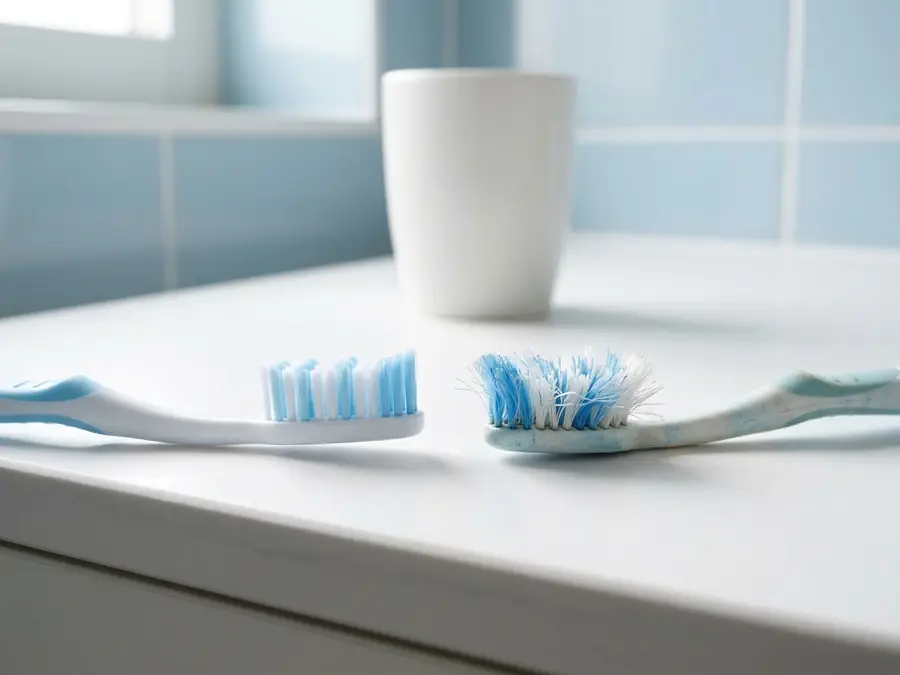
It’s generally advised to replace your toothbrush about every 3–4 months, or sooner if the bristles splay or flatten earlier. The same applies to electric brush heads. Worn bristles don’t sit well against the tooth surface and gum line, so they remove plaque less effectively. How long a brush lasts depends not only on the calendar but also on how you brush and how you store it. In this article we cover the signs that it’s time for a new brush and practical ways to keep it clean.
How often should you replace a toothbrush?
| Brush | When to replace it | Note |
|---|---|---|
| Manual brush (adult) | About every 3–4 months | Sooner if the bristles splay earlier |
| Electric brush head | About every 3 months | When the coloured indicator bristles fade |
| Child’s brush | Check more often | Wears faster because children chew it |
| People wearing braces | Check more often | Wires and brackets wear bristles down quickly |
| Interdental brush | When the wire bends or the bristles flatten | Short-lived; keep a few spares |
Signs it’s time for a new brush
- The bristles are splayed outwards, flattened or bent.
- The coloured indicator bristles on an electric brush head have faded halfway.
- There is build-up or discolouration between or at the base of the bristles that won’t rinse out.
- The brush smells unpleasant even after rinsing.
- The brush fell on the floor or in the sink, or someone else used it by mistake.
Looking for these signs is more reliable than going by the calendar. To make it easy to remember, many people change their brush at the start of each season.
If your brush splays within a month or two
A brush whose bristles splay within a few weeks usually means you are pressing too hard. Hard brushing doesn’t remove more plaque; instead it irritates the gum line and over time can contribute to gum recession and wear at the necks of the teeth. Holding the brush lightly, like a pen, and brushing with small circular movements without pressing is enough. Electric brushes with a pressure sensor warn you when you press too hard. For more, see how to brush properly and bleeding and receding gums.
Should you replace your toothbrush after flu or a throat infection?
There is no strong evidence that replacing your brush after an illness stops you from getting ill again; a healthy immune system usually copes with the small number of microorganisms that may remain on a brush. Still, if the brush is already old, or someone at home has a weakened immune system, replacing it is a sensible and inexpensive precaution. While someone is ill, it’s also a good habit to keep their brush apart from the others.
We discuss whether to go to a dental appointment when you are unwell in can you have dental treatment when you’re ill.
How should you store a toothbrush?
- After brushing, rinse the brush thoroughly under running water and shake off the excess.
- Store it upright, in the open, where it can air-dry on its own.
- Don’t put a closed cap or case on a wet brush; a damp environment helps microorganisms multiply. When travelling, use a cap with ventilation holes.
- Make sure family members’ brush heads don’t touch each other.
- A toothbrush is personal; don’t share it, even within the family.
- Closing the toilet lid when you flush and keeping brushes as far from the toilet as possible is a simple precaution.
Do you need to disinfect your toothbrush?
Healthy people don’t need to disinfect their toothbrush regularly; rinsing it under running water and letting it dry is enough. Boiling water, the microwave and the dishwasher can damage the bristles and handle. If you want to dip your brush in mouthwash, use a clean cup and fresh liquid each time; sharing one cup between several brushes can carry microorganisms from one to another. If you are having treatment that affects your immune system, talk to your doctor about toothbrush care. For more on daily mouthwash use, see can you use mouthwash every day.
What to look for in a new toothbrush
For most people, a soft-bristled brush with a small head that reaches the back teeth comfortably is a good choice. Hard bristles don’t clean better and can wear down gums and enamel. Manual and electric brushes are both effective when used correctly; an electric brush can make things easier for people with limited dexterity and for those wearing braces. We compare them in electric toothbrushes and water flossers. Don’t forget to clean between your teeth, where a brush can’t reach, with floss or interdental brushes.
Brushing check-ups in Beylikdüzü
At check-ups at Dent32 we look at where plaque is being left behind and at the condition of your gums together with you, and talk about your brushing technique and whether your brush suits you.
Dent32 is at Barış Mah., Ginza Lavinya, E-5 Yanyolu No:30 D:179, 34520 Beylikdüzü, Istanbul and is open seven days a week. To book, call or WhatsApp +90 555 011 33 68, or use our contact page. At the examination we share the findings, the options and the approximate cost in writing; you are under no obligation to start treatment afterwards.
Frequently asked questions
How often should I replace my toothbrush?
About every 3–4 months. If the bristles have splayed or flattened sooner, replace it straight away.
When should I change my electric toothbrush head?
About every 3 months, or when the coloured indicator bristles fade. A head with splayed bristles should be replaced sooner.
Should I replace my toothbrush after being ill?
There is no strong evidence that it prevents reinfection. If the brush is already old, or someone at home has a weakened immune system, replacing it is a sensible precaution.
Should I keep a cap on my toothbrush?
Not while it’s wet. Let it dry upright in the open air, and use a ventilated cap when travelling.
Can I disinfect my toothbrush in boiling water?
It isn’t advised, as boiling water damages the bristles. Rinsing it under running water after use and letting it dry is enough.