
Why do children grind their teeth? When does night-time grinding need treatment?
Teeth grinding at night (bruxism) is common in children and usually eases by itself as they grow. The main causes are brief awakenings during sleep, stress, the period when adult teeth come through and, in particular, breathing problems such as snoring or enlarged adenoids. If there is marked tooth wear, jaw or headache in the morning, snoring or mouth breathing, it should be assessed. This article answers the questions parents ask most.

Is teeth grinding normal in children?
Teeth grinding is very common in preschool and school-age children; studies report it in roughly 15–40% of children. Because baby teeth are soft, mild wear is common at this age and usually causes no problems. Grinding generally decreases once baby teeth have been replaced by adult teeth and in adolescence.
Causes of teeth grinding in children
- Brief awakenings during sleep: grinding often happens as sleep becomes lighter.
- Breathing problems: enlarged adenoids or tonsils, allergic nasal congestion, snoring and sleep apnoea often go together with grinding.
- Stress and anxiety: it can coincide with changes such as starting school, moving house or a new sibling.
- Changing teeth: as new teeth alter the bite, children may grind as if settling their teeth. See when do baby teeth fall out?
- ADHD and some medicines: grinding has been reported more often in these situations.
- Caffeine and screens in the evening: cola, tea and late screen time disturb sleep quality.
In Turkey, grinding is popularly linked to intestinal worms; scientific evidence for this is weak. If you suspect worms (for example an itchy bottom), see your paediatrician; grinding on its own is not enough to suggest it.
When should you see a dentist or ENT doctor?
- if teeth are noticeably flattened, chipped or sensitive;
- if your child complains of jaw, face or headache in the morning;
- if there is snoring, pauses in breathing during sleep, mouth breathing, night sweats or waking up tired (an ENT assessment is advisable);
- if grinding continues during the day or adult teeth have started to wear;
- if there is clicking, locking or pain when opening the jaw. See jaw joint pain
How is teeth grinding treated in children?
For most children, treatment means finding the cause and monitoring:
- a regular bedtime, a calm routine and switching screens off at least an hour before bed;
- cutting down on cola, tea, energy drinks and chocolate in the evening;
- an ENT examination if there is snoring or mouth breathing; grinding may ease once enlarged adenoids are treated;
- talking about sources of stress and, if needed, child mental health support;
- monitoring wear at six-monthly dental check-ups.
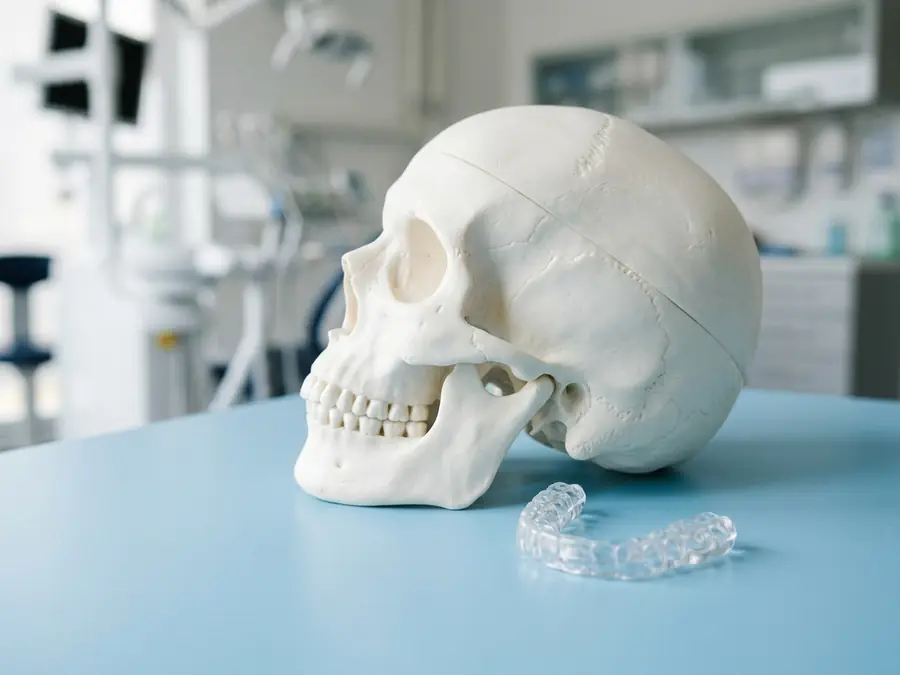
While the jaw is still growing, a night guard is usually not the first option for baby teeth. If adult teeth show marked wear, the dentist may suggest a soft guard that doesn't restrict growth. We cover clenching and night guards in adults in teeth clenching and night guards.
Does grinding damage the teeth?
Mild grinding usually leaves no lasting harm on baby teeth, which will be replaced anyway. Prolonged, heavy grinding can wear enamel, cause sensitivity and chipping, and wear on adult teeth can't be reversed. Wear from grinding shouldn't be confused with erosion from acidic drinks; when both are present, wear speeds up. See dental erosion.
Children's dental check-ups in Beylikdüzü
At Dent32 we record tooth wear with photographs during children's check-ups and compare them at follow-up visits; if there are signs suggesting a breathing problem, we refer the family for an ENT assessment. For a child's first visit, see children's dentist in Beylikdüzü.
Dent32 is at Barış Mah., Ginza Lavinya, E-5 Yanyolu No:30 D:179, 34520 Beylikdüzü, Istanbul and is open seven days a week. To book, call or WhatsApp +90 555 011 33 68, or use our contact page. At the examination we share the findings, the options and the approximate cost in writing; you are under no obligation to start treatment afterwards.
Frequently asked questions
Does teeth grinding in children go away on its own?
In most children grinding decreases with growth, especially after baby teeth have been replaced. If there is snoring, pain or marked wear, it should be assessed.
Is teeth grinding in children caused by worms?
It's a common belief, but the scientific evidence is weak. The most common causes are brief awakenings during sleep, breathing problems, stress and the period of changing teeth.
Should a child who grinds wear a night guard?
During the baby-teeth years a night guard is usually not the first option. If adult teeth show marked wear, the dentist may suggest a soft guard suited to growth.
Is there a link between grinding and snoring?
Yes. Snoring, mouth breathing and sleep apnoea often occur together with grinding. If these signs are present, an ENT examination is advisable.