Why do adult teeth become loose? Gum disease, injury, clenching and treatment
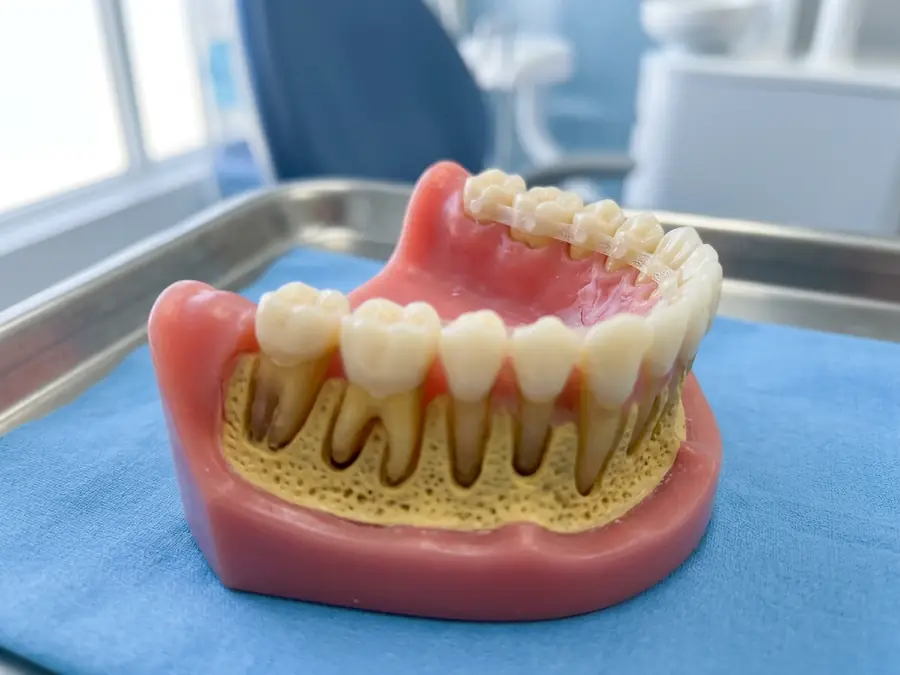
The most common reason for a loose tooth in an adult is loss of the bone that holds it, caused by gum disease (periodontitis). Injury, clenching, an abscess at the root tip and hormonal changes in pregnancy can also make teeth mobile. If the cause is found and treated early, many loose teeth can be kept; waiting allows more bone to be lost.
Causes of loose teeth
| Cause | Clues |
|---|---|
| Advanced gum disease (periodontitis) | Movement in several teeth, receding gums, bleeding, bad breath, gaps opening between teeth |
| Injury | One tooth after an accident or fall, sometimes displaced |
| Clenching / grinding | Worn teeth, tired jaw in the morning, cracked crowns |
| Abscess at the root tip | Pain, swollen gum or a fistula (a pimple-like draining spot) |
| Pregnancy | Temporary slight movement with gum inflammation |
| During orthodontic treatment | Slight movement is expected and settles after treatment |
Looseness from gum disease
If gum inflammation isn't treated, bacteria move below the gum line, pockets form between tooth and gum, and the supporting bone is gradually lost. This usually happens without pain; by the time a tooth is loose, bone loss is often advanced. Treatment involves measuring pocket depths, assessing the bone on X-rays, deep cleaning and, if needed, gum surgery. More: gum pockets and bone loss, gum inflammation.
Can a loose tooth be saved?
- Treating the cause: a tooth won't firm up until gum inflammation, an abscess or excess force is dealt with.
- Splinting: loose teeth are bonded to their neighbours on the back surface with a thin wire or fibre, spreading the chewing load.
- Bite adjustment and night guard: load is reduced for people who clench and for teeth that hit first when biting. See teeth grinding and night guards.
- Extraction and replacement: if bone loss is very advanced, the tooth may not be saveable; implant, bridge or denture options are discussed. See implant or bridge.
When to come in without waiting
- A tooth displaced, pushed forwards or backwards, or knocked out after an injury (bring a knocked-out tooth in cold milk)
- A loose tooth with facial swelling or fever
- Mobility increasing quickly over a few days
For first aid after an injury, see the first 30 minutes after a fall or blow.
Examination in Beylikdüzü
For the treatment process, see also gum treatment in Beylikdüzü.
Dent32 is at Barış Mah., Ginza Lavinya, E-5 Yanyolu No:30 D:179, 34520 Beylikdüzü, Istanbul and is open seven days a week. To book, call or WhatsApp +90 555 011 33 68, or use our contact page. At the examination we share the findings, the options and the approximate cost in writing; you are under no obligation to start treatment afterwards.
Frequently asked questions
Will a loose tooth tighten by itself?
Temporary looseness after a minor knock or in pregnancy can settle by itself. Looseness from gum disease won't improve without treatment.
Can a loose tooth be replaced with an implant?
The tooth first has to be extracted and the gum disease brought under control. Whether the tooth can be saved is assessed first.
How long does a splint last?
Once the cause has been treated, a splint can be used for years with regular check-ups and cleaning.