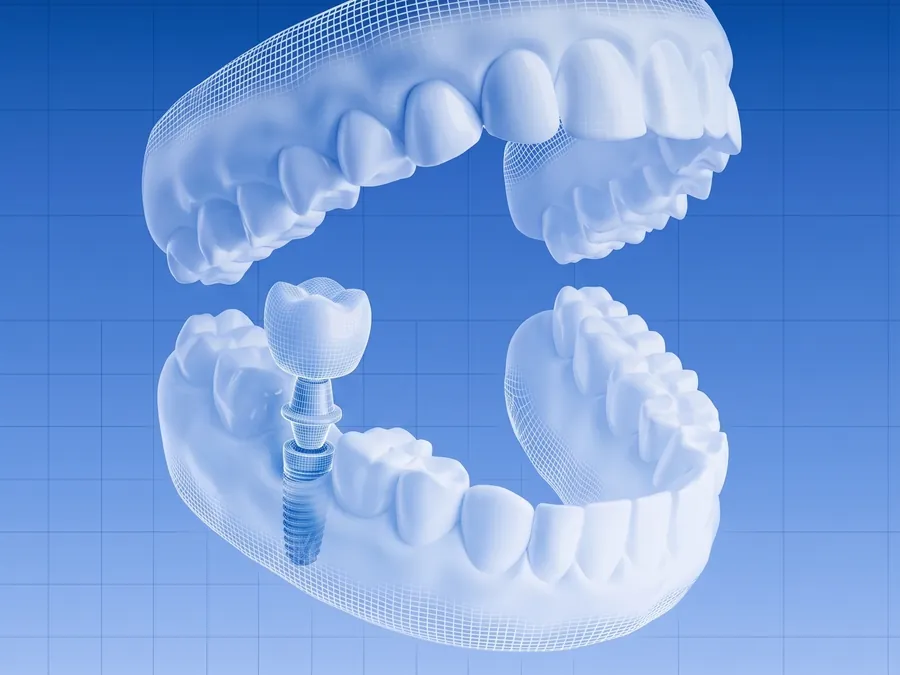

Implant or bridge? Which is better for a missing tooth?
There are two fixed ways to replace a missing tooth: an implant placed in the jawbone, or a bridge supported by the neighbouring teeth. An implant leaves the neighbouring teeth untouched and helps preserve bone; a bridge is quicker but may require reducing healthy teeth.
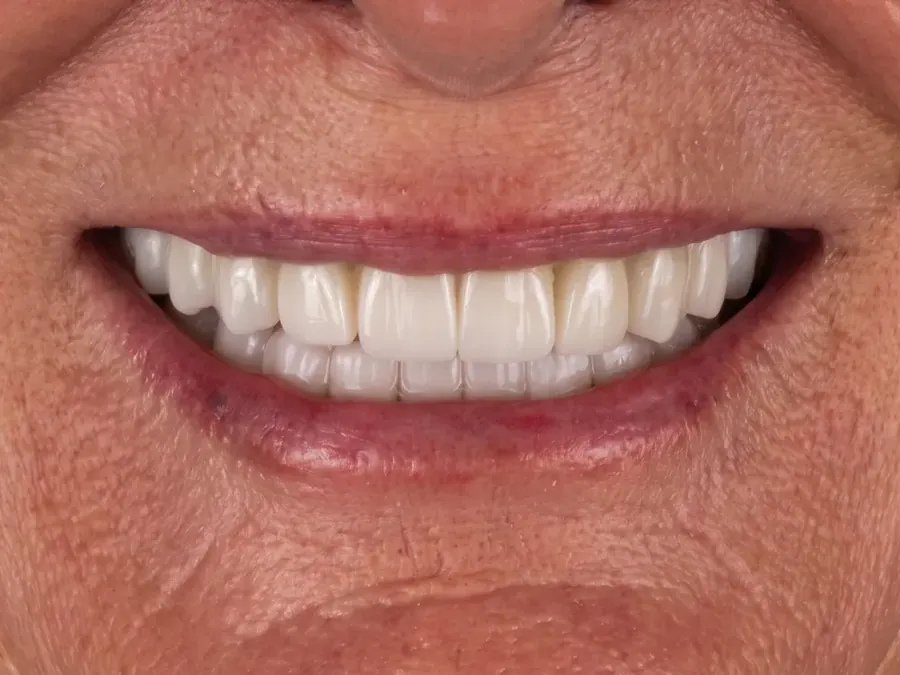
The key differences between an implant and a bridge
| Feature | Implant | Bridge |
|---|---|---|
| Neighbouring teeth | Untouched | Supporting teeth are reduced |
| Bone | Transfers chewing load to bone, slowing shrinkage | Bone under the gap continues to shrink |
| Time | Usually 3–6 months | Usually 1–2 weeks |
| Surgery | Minor surgery needed | No surgery |
| Cleaning | Brush and floss like a natural tooth | Special floss or interdental brush under the bridge |
| Initial cost | Usually higher | Usually lower |
When does an implant make more sense?
- When the teeth either side of the gap are healthy and unfilled: there's no reason to reduce them for a bridge.
- When there's enough bone, or bone can be built up with a graft.
- When you want a long-term, independent solution: if a problem ever arises with an implant, the neighbouring teeth aren't affected.
- When several teeth in a row are missing and there aren't enough supporting teeth for a bridge.
For the stages and timeline, see how long implant treatment takes.
When might a bridge be the better choice?
- When the neighbouring teeth already have large fillings or need crowns anyway: the bridge protects them at the same time.
- When general health doesn't allow surgery.
- When bone is very limited and the patient doesn't want extra surgery.
- When treatment needs to be completed quickly.
Our article on types of dental crowns explains the materials used for bridges.
Which lasts longer?
Both can last many years when well planned and properly cared for. With bridges, the most common problems are decay starting at the crown margins of the supporting teeth and gum problems, so cleaning under the bridge is essential. With implants, the main risk is inflammation of the gum and bone around the implant (peri-implantitis).
Over the long term implants usually have the edge, because even if the crown is replaced the implant itself can stay in place.
How is the decision made?
The decision depends on the neighbouring teeth, bone volume, general health, budget and expectations. At the examination we explain both options with their pros and cons and compare them in writing. Get in touch to book an appointment.
Frequently asked questions
Can I switch from a bridge to an implant later?
Yes. The bridge can be removed and an implant placed in the gap; but because the supporting teeth were reduced, they will need crowns too. Bone is assessed separately.
Which is recommended for a single missing tooth?
If the teeth on either side are healthy, an implant is usually recommended because no healthy tooth structure is removed. If the neighbouring teeth need crowns anyway, a bridge can also be suitable.
What is an implant bridge?
When several teeth are missing, a bridge is made on two or more implants instead of placing one implant per tooth. Natural teeth aren't touched.
Is a removable denture also an option?
Yes. Partial dentures cost less but offer less comfort and chewing efficiency than fixed solutions.