
What is implant treatment and how many months does it really take?
Implant treatment replaces the root of a missing tooth with a titanium screw placed in the jawbone, topped with a permanent tooth; for most patients the whole process takes between 3 and 6 months.
What is an implant and how does it work?
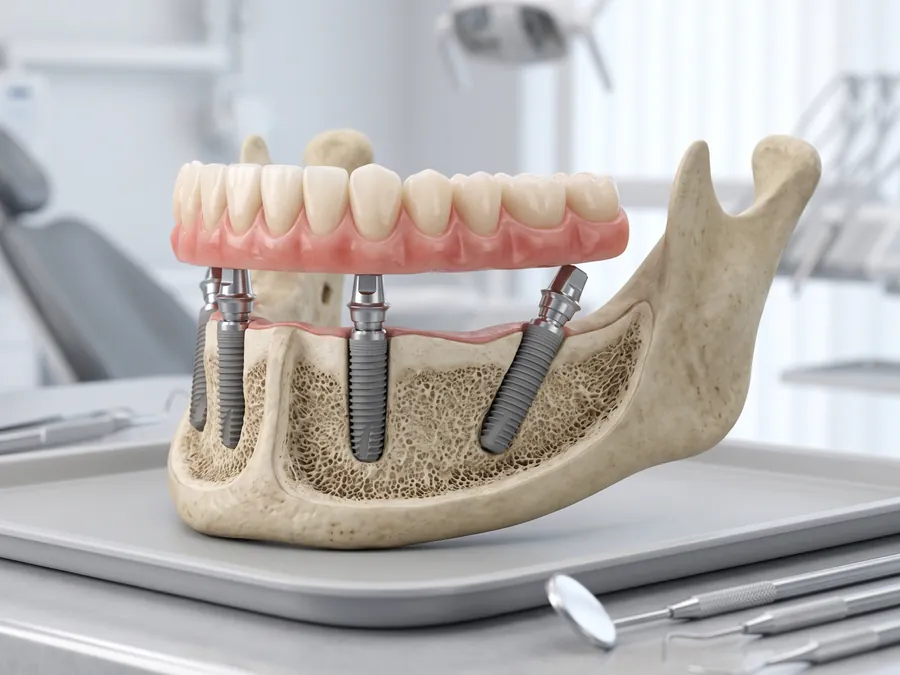
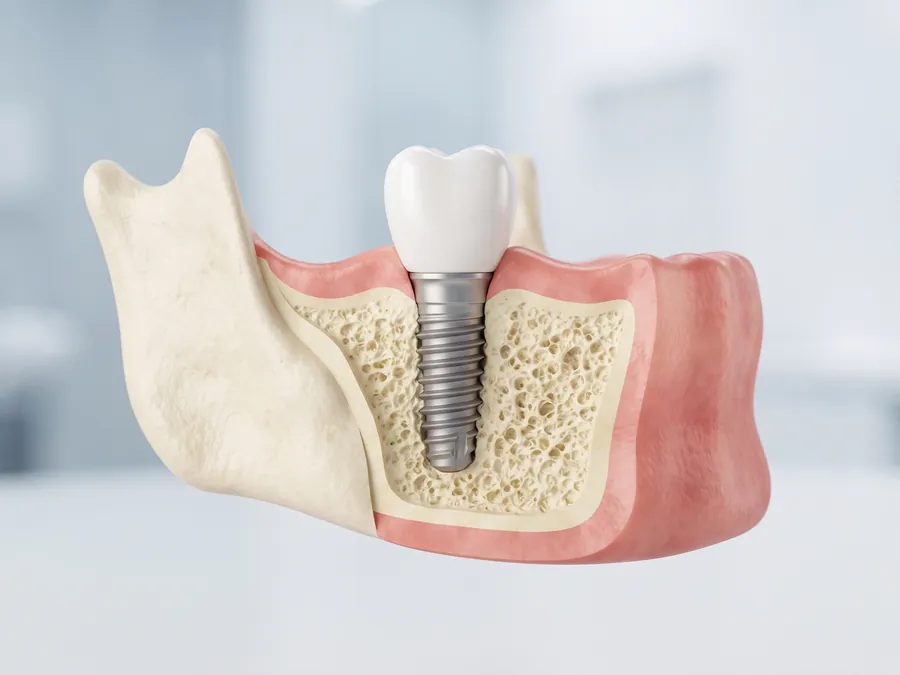
An implant is a small screw placed in the jawbone that takes over the role of a natural tooth root. It is usually made of titanium or a titanium alloy, a material that can fuse directly with bone. This fusion is called osseointegration.
Once integration is complete, a connector (abutment) is attached to the implant and a crown, bridge or prosthesis is fixed on top. Replacing a missing tooth without touching the neighbouring teeth is the implant's main advantage over a bridge.
How many months does treatment really take?
Most of the time is the waiting period needed for the implant to integrate with the bone. The table below shows general ranges:
| Stage | Typical time |
|---|---|
| Examination and 3D CT scan | 1–2 appointments |
| Healing after extraction (if needed) | About 2–3 months, or implant placed at the same visit |
| Bone graft / sinus lift (if needed) | Can add 3–6 months |
| Placing the implant | Usually 30–60 minutes for a single implant |
| Bone integration | About 2–3 months in the lower jaw, 3–6 months in the upper |
| Impressions and final tooth | A few appointments, about 1–2 weeks |
What makes it take longer?
- Insufficient bone volume: a bone graft or sinus lift may be needed.
- Active infection: inflammation in the tooth or gum is treated first.
- Smoking: slows healing and increases the risk of failure.
- Uncontrolled diabetes and some medications: can affect bone healing.
- Upper jaw: bone is usually less dense, so integration takes longer.
Are same-day implants and teeth possible?
In some cases an implant can be placed at the same visit as the extraction (immediate implant). If initial stability is sufficient, a temporary tooth can be fitted the same day. That temporary tooth is adjusted so it takes no chewing load; the final tooth is still made after integration.
This approach is not suitable for every patient. Bone structure, infection and tooth position are assessed together.
Is implant surgery painful?
Implant placement is done under local anaesthetic, and most patients feel no pain during the procedure, though pressure and vibration may be felt. Mild swelling and tenderness for a few days afterwards are normal and are managed with painkillers.
In the first days, cold compresses, a soft diet and gentle cleaning of the area are recommended.
What determines the cost?
| Factor | Explanation |
|---|---|
| Implant brand | Systems with strong clinical evidence and long-term parts availability are preferable |
| Restoration | Zirconia or porcelain-fused-to-metal crown |
| Additional surgery | Bone graft, sinus lift, extraction |
| Number of implants | Single tooth, bridge or full-mouth plan |
Frequently asked questions
Do implants last a lifetime?
With proper care an implant can last for many years. The crown on top can wear and may need replacing. Regular check-ups and cleaning are the key to success.
Can anyone have implants?
Most people whose jaw has finished growing, whose health allows minor surgery and who have enough bone can. Some systemic conditions and medications need detailed assessment.
What if the implant fails?
Rarely, an implant may not integrate. It is then removed and, once the area has healed, a new placement can be planned.
When can I go back to work after an implant?
Most patients return to daily activities the day after a single implant. After more extensive surgery a few days' rest may be advised.
Implant or bridge?
An implant doesn't touch neighbouring teeth; a bridge requires them to be reduced. The decision is made by considering bone, general health and expectations together.