
How to get rid of gum inflammation: symptoms, home care, sore gums and treatment
Gum inflammation (gingivitis) is the gums' reaction to bacterial plaque building up on the teeth: the gums turn red, swell and bleed when you brush. Caught early, it usually reverses completely within 1–2 weeks with proper brushing, cleaning between the teeth and, if needed, a scale and polish. Left untreated, it can progress to periodontitis, where the attachment between gum and bone is lost.
Signs of gum inflammation
- Bleeding when brushing, flossing or biting into an apple
- Redness and a shiny, swollen look at the gum line
- Tender gums that ache when touched
- Bad breath and a bad taste in the mouth
- The gum edge looking slightly detached from the tooth
Gum disease often starts without pain, so it can go unnoticed. Bleeding shouldn't be dismissed as 'brushing too hard'.
How to get rid of gum inflammation at home
- Keep brushing even if it bleeds: bleeding shows plaque has built up there. Brush twice a day for at least two minutes with a soft brush angled at 45 degrees to the gum line.
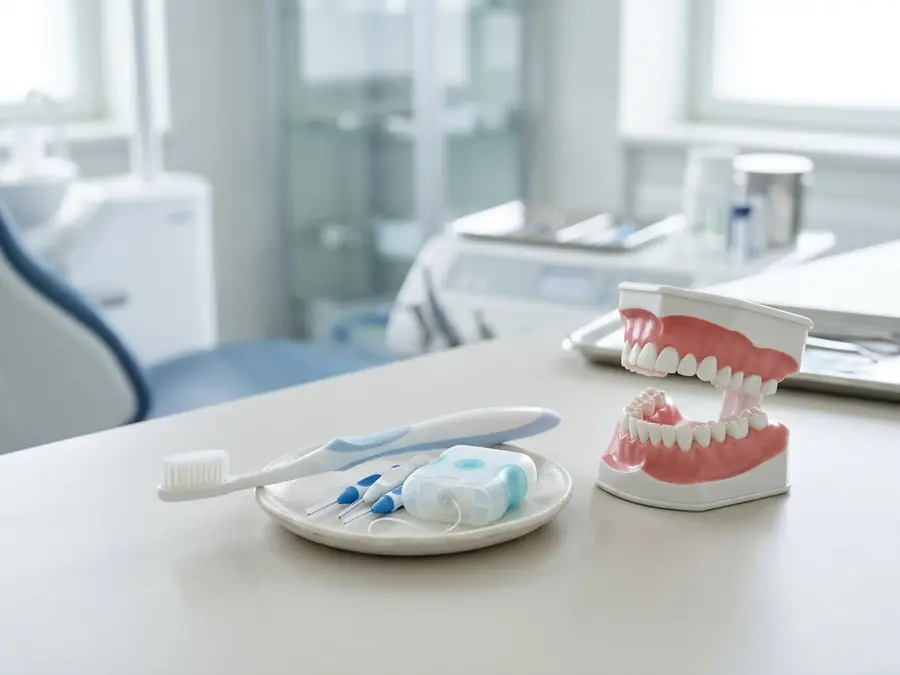
- Clean between your teeth: use floss or interdental brushes every day. Bleeding may increase in the first days, then eases within a week.
- Use mouthwash sensibly: chlorhexidine mouthwashes are used short-term on a dentist's advice; long-term use can stain teeth. Mouthwash doesn't replace brushing.
- Cut down on smoking: smoking masks bleeding and slows healing.
For the right technique: how to brush your teeth properly.
Why do gums become sore?
| Cause | Explanation |
|---|---|
| Plaque and tartar | The most common cause; inflammation makes the gums tender |
| Brushing too hard | Irritates the gums and can cause recession |
| Hormonal changes | Gums inflame more easily in pregnancy and puberty. See dental treatment during pregnancy |
| Diabetes | Uncontrolled blood sugar speeds up gum disease |
| Some medicines | Can cause gum overgrowth or a dry mouth |
| Poorly fitting fillings, crowns or dentures | Plaque collects at the edges |
When should you see a dentist?
If bleeding continues despite two weeks of regular care, if there is tartar, or if the gums are receding or teeth are loose, you need an examination. Tartar doesn't come off with a toothbrush; it needs a professional clean. If gum pockets have deepened, deep cleaning (root planing) is done. More: scale and polish, bleeding and receding gums, gum pockets and bone loss.
Gum health and general health
Gum disease has been linked with heart and blood vessel disease and with diabetes control. You can read more in the summary of Dr. Hüseyin Aşçı's DHA interview.
Gum examination in Beylikdüzü
For the treatment process, see gum treatment in Beylikdüzü.
Dent32 is at Barış Mah., Ginza Lavinya, E-5 Yanyolu No:30 D:179, 34520 Beylikdüzü, Istanbul and is open seven days a week. To book, call or WhatsApp +90 555 011 33 68, or use our contact page. At the examination we share the findings, the options and the approximate cost in writing; you are under no obligation to start treatment afterwards.
Frequently asked questions
How many days does gum inflammation take to clear?
Early inflammation usually settles within 1–2 weeks with regular brushing and cleaning between the teeth. If there is tartar, a professional clean is needed.
My gums bleed. Should I stop brushing?
No. Bleeding shows there is plaque there; keep brushing gently and regularly with a soft brush. If it hasn't stopped in two weeks, have an examination.
Which mouthwash helps gum inflammation?
Chlorhexidine mouthwashes can be used short-term on a dentist's advice. Mouthwash doesn't replace brushing and cleaning between the teeth.
Can gum inflammation make teeth fall out?
Early inflammation doesn't. But left untreated it can progress to periodontitis, which causes bone loss and loose teeth.