Child's tooth broken or knocked out after a fall: what to do in the first 30 minutes
An adult tooth knocked out completely has the best chance of being saved if it's put back within the first 30–60 minutes. Hold the tooth by the crown, not the root; if it's dirty, rinse it for a few seconds in milk or saline and, if you can, put it straight back in its socket. If you can't, keep it in milk and go to a dentist without delay. Baby teeth are not put back.
Knocked-out adult tooth: first aid step by step
- Stay calm and find the tooth. Hold it by the crown (the white part); don't touch the root.
- If it's dirty, rinse it in cold milk, saline or tap water for no more than 10 seconds. Don't scrub, wipe or use soap.
- If possible, put the tooth straight back into its socket the right way round. Have the person bite on a clean handkerchief or gauze to hold it in place.
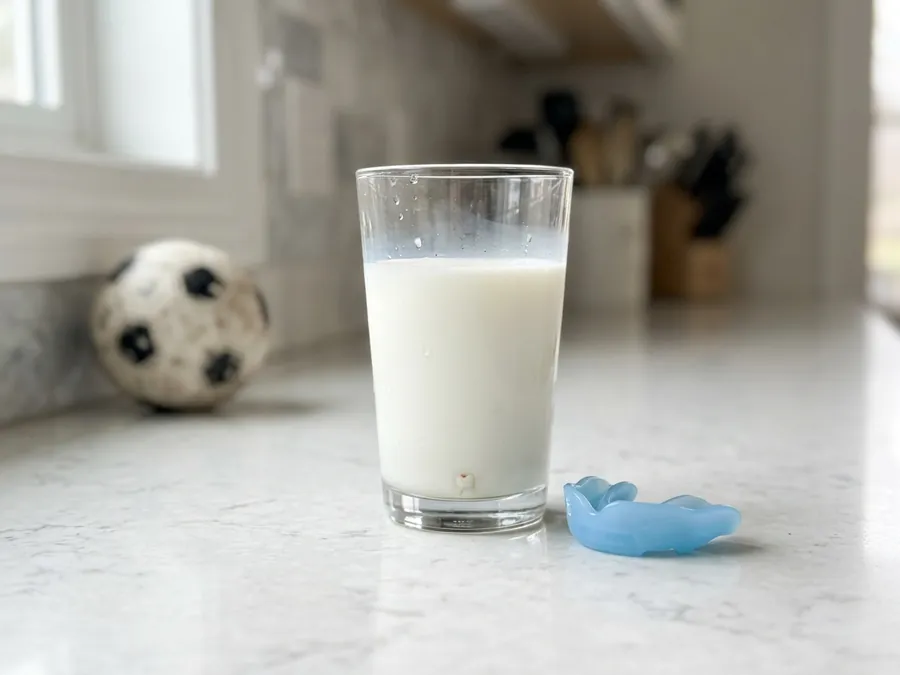
- If you can't put it back, keep the tooth in a glass of cold milk. If there's no milk, use saline; a conscious adult can also keep it in saliva inside the cheek. Never wrap it in a dry tissue or keep it in water.
- Go to a dentist without delay. Time is the most important factor in saving the tooth.
What if a baby tooth is knocked out?
A knocked-out baby tooth is not put back; doing so can damage the adult tooth developing underneath. Stop the bleeding by pressing with clean gauze and take your child to a dentist the same day. The dentist checks for damage to the adult tooth and surrounding tissues; a space maintainer may be needed to hold the space of a baby tooth lost early.
If you're not sure whether it's a baby or adult tooth, as a general rule the front teeth are mostly baby teeth before the age of 6–7. If in doubt, keep the tooth in milk and see a dentist immediately.
Broken, loosened or pushed-in teeth
| Situation | What to do |
|---|---|
| Part of the tooth has broken off | Find the fragment and keep it in milk or water; it can often be bonded back. See a dentist the same day |
| Pink-red spot on the broken surface (nerve exposed) | See a dentist the same day, within a few hours if possible |
| Tooth loosened or pushed out of position | Don't force it; the dentist repositions and splints it the same day |
| Tooth pushed up into the gum | Dentist the same day; treatment depends on the type of tooth and age |
| Cut lip, tongue or gum | Apply cold and pressure; deep cuts may need stitches |
For broken teeth in adults, see what to do if you break a tooth.
When to go to A&E first
- Loss of consciousness, vomiting, severe headache or drowsiness (signs of head injury)
- Bleeding that won't stop
- A change in the shape of the jaw or difficulty opening and closing the mouth (possible jaw fracture)
- Difficulty breathing, or suspicion that the tooth was swallowed or inhaled
With any of these signs, go to A&E first; dental treatment follows once the person's general condition has been assessed.
After treatment, and prevention
Injured teeth can change colour or the nerve can be affected even months later, so it's important to attend the follow-up appointments the dentist recommends (usually after a few weeks, a few months and a year). Replanted teeth are splinted to the neighbouring teeth with a flexible wire for a few weeks.
A custom mouthguard protects the teeth during basketball, football, combat sports and cycling. We cover preventive care for children in children's dentist in Beylikdüzü. We're open at weekends in Beylikdüzü too; after an injury, contact us straight away by WhatsApp or phone: +90 555 011 33 68.
Frequently asked questions
Can a knocked-out tooth be put back?
Adult teeth often survive, especially if put back within the first 30–60 minutes. Baby teeth are not put back.
What should I keep a knocked-out tooth in?
Cold milk is best. If there's no milk, saline can be used. Don't keep it in water or a dry tissue.
Can a broken piece of tooth be stuck back on?
Often yes. Keep the fragment in milk or water and bring it to a dentist the same day.
The tooth went grey after a knock. What does it mean?
It may mean the nerve has been affected. It needs checking with an X-ray, and root canal treatment may be planned if needed.
A baby tooth was knocked out. Does anything need to replace it?
The dentist checks the adult tooth; a space maintainer may be needed after early loss.