

Is sugar-free gum good for your teeth? Decay, dry mouth and the effect on your jaw
Chewing sugar-free gum for 15–20 minutes after a meal increases saliva flow, and that extra saliva helps neutralise acid in the mouth and wash away food debris. That makes sugar-free gum a useful stopgap for your teeth when you can’t brush. But it doesn’t replace brushing and flossing. Gum with sugar raises the risk of decay. Chewing gum for long periods and often can also tire the jaw joint and muscles.
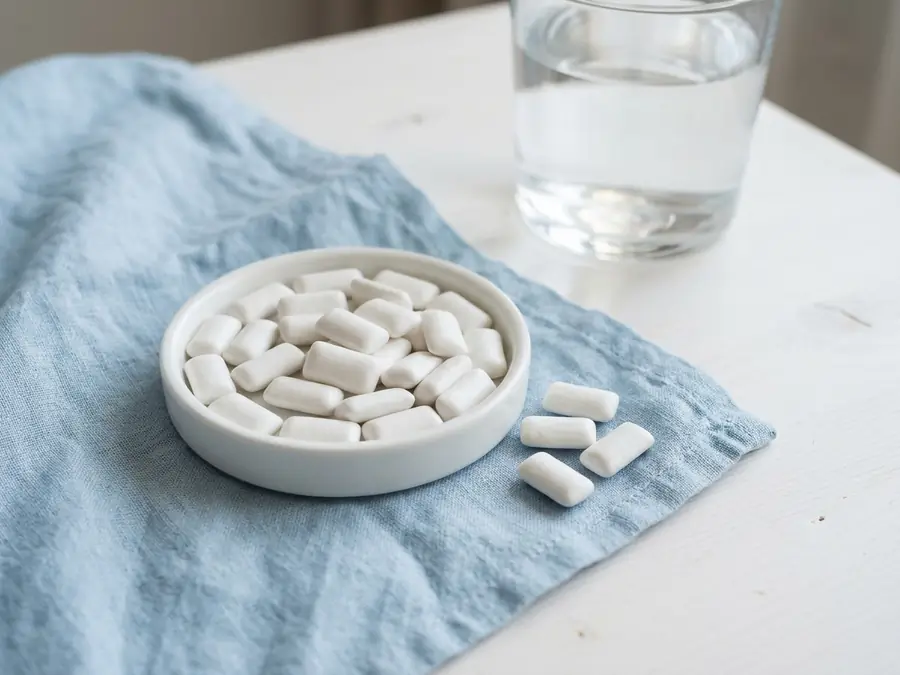
How does sugar-free gum help?
Chewing stimulates the salivary glands. Saliva buffers the acid that rises after eating, carries calcium and phosphate to the enamel and clears food debris. This helps shorten the acidic phase in which decay begins.
Being sugar-free is what matters here. Sugary gum keeps feeding the bacteria in the mouth and has the opposite effect. Gums sweetened with xylitol, sorbitol or maltitol don’t increase acid production by bacteria; there are studies suggesting xylitol can also reduce bacterial growth, but on its own it doesn’t prevent decay.
Quick summary
| Question | Answer |
|---|---|
| Does it replace brushing? | No; it’s only a stopgap |
| How long should you chew? | 15–20 minutes after a meal is enough |
| Gum with sugar? | Raises the risk of decay |
| Chewing all day? | Can tire the jaw joint and muscles |
| For dry mouth? | Can bring relief by increasing saliva |
| For bad breath? | Masks it temporarily; doesn’t fix the cause |
When does chewing gum make sense?
- You’ve eaten out and can’t brush.
- While waiting to brush after an acidic drink; see when to brush after eating.
- For dry mouth caused by medicines or not drinking enough; see causes of dry mouth.
- When you have few chances to drink water, such as long meetings or journeys.
For bad breath, gum only freshens things up for a while. If the smell is persistent, a cause such as the gums, the tongue surface or food trapped between teeth should be looked for; see causes of bad breath.
Can gum harm your jaw?
Chewing for a short time causes no problems for most people. But chewing gum for hours every day can tire the chewing muscles and the jaw joint. If you have jaw pain, clicking or tiredness in the morning, or you clench your teeth at night, cutting down on or stopping gum can help. See jaw joint pain and clicking and teeth grinding and night guards.
Natural mastic gum contains no sugar either, but because it’s firm it can work the jaw muscles harder.
Gum with fillings, crowns, braces and dentures
- Permanent fillings and crowns: Sugar-free gum usually causes no problems. If you notice a crown or filling sticking to the gum, get it checked; its edge may be loosening.
- Temporary fillings and crowns: Don’t chew gum; it can pull them out. See how long a temporary filling lasts.
- Fixed braces: Gum can stick to brackets and wires; follow your dentist’s advice. See living with braces.
- Clear aligners: Don’t chew gum with the aligners in.
- Dentures: Gum can stick to the surface of the denture.
Things to be aware of
- In large amounts, sorbitol, xylitol and maltitol can cause wind and diarrhoea in some people.
- Xylitol is poisonous to dogs; keep gum where pets can’t reach it.
- Gum isn’t suitable for young children because of the risk of swallowing and choking.
- People with phenylketonuria should check the sweeteners on the label.
- Always put used gum in the bin, not on the pavement or under a desk.
Care based on your decay risk at Dent32 in Beylikdüzü
At the examination we assess your decay risk by looking at your diet, saliva flow and previous fillings, and plan brushing, flossing and fluoride use around you. We explain how decay starts in signs and stages of tooth decay.
Dent32 is at Barış Mah., Ginza Lavinya, E-5 Yanyolu No:30 D:179, 34520 Beylikdüzü, Istanbul and is open seven days a week. To book, call or WhatsApp +90 555 011 33 68, or use our contact page. At the examination we share the findings, the options and the approximate cost in writing; you are under no obligation to start treatment afterwards.
Frequently asked questions
Does sugar-free gum replace brushing?
No. When you can’t brush it helps by increasing saliva, but plaque is only removed by a brush and floss.
How long should I chew gum after a meal?
15–20 minutes is enough. Chewing for hours brings no extra benefit for your teeth and can tire the jaw muscles.
Does xylitol gum prevent decay?
Xylitol doesn’t increase acid production by bacteria, and some studies have found it helps reduce decay risk. But on its own it doesn’t prevent decay or replace brushing, flossing and fluoride.
Can chewing gum cause jaw pain?
It can if you chew for long periods and often. People with jaw joint pain or a clenching habit should limit gum.
Can I chew gum with fillings?
Sugar-free gum usually causes no problems with permanent fillings. Don’t chew gum if you have a temporary filling or temporary crown.