How to clean dentures: should you take them out at night, and how to use denture adhesive
Removable dentures should be taken out and brushed every day with a soft brush and a non-abrasive cleaner, and rinsed with water after meals. Taking them out at night and storing them in clean water or denture-cleaning solution lets the tissues in your mouth rest and lowers the risk of fungal infection. Hot water, bleach and ordinary toothpaste can damage dentures. Adhesive is used in small amounts to support a well-fitting denture; it isn’t the answer to a loose one.
Daily cleaning step by step
- After eating, take the denture out and rinse it under running water to remove food.
- Fill the sink with water or lay a towel in it, so the denture doesn’t break if you drop it.
- At least once a day, brush every surface of the denture (including the gum-coloured part and the palate) with a soft denture brush.
- Use liquid soap, denture-cleaning foam or a non-abrasive cleaner instead of ordinary toothpaste.
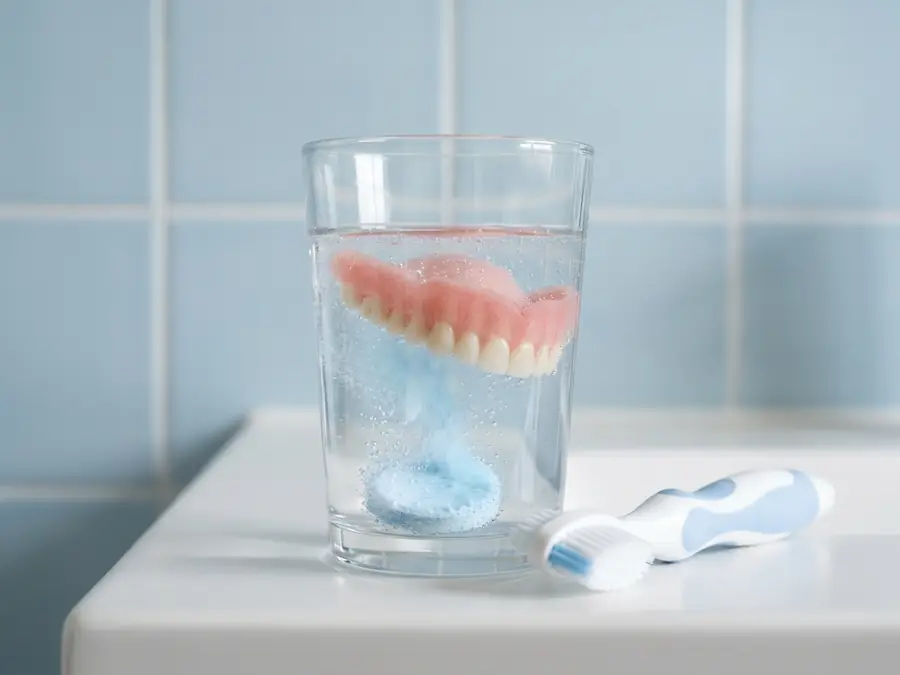
- Soak it in a denture-cleaning tablet a few times a week, or as often as the manufacturer suggests, then rinse thoroughly.
- Also clean any remaining teeth, your gums, palate and tongue with a soft brush.
What damages dentures
- Hot or boiling water: can warp acrylic dentures and change their shape, so they no longer fit.
- Bleach: fades the pink acrylic and can corrode metal parts.
- Ordinary toothpaste and hard brushes: scratch the acrylic; scratches hold stains and bacteria.
- Baking soda and abrasive powders: roughen the surface.
- Leaving dentures dry: acrylic can change shape as it dries out.
Should you take dentures out at night?
Yes, unless your dentist says otherwise. The gum and palate under a denture are under pressure all day and don’t get contact with air and saliva. Taking it out at night lets the tissues rest. Sleeping in dentures raises the risk of redness and fungal infection on the palate (denture stomatitis), and some studies link it with a higher risk of pneumonia in older people.
When you take the denture out, store it in clean water or denture-cleaning solution in a container with a lid, and wash the container every day too. Similar advice for appliances is in how to clean night guards and aligners.
How to use denture adhesive
- Apply adhesive to a clean, dry denture in thin strips or a few small dots; too much will ooze out at the edges.
- Put the denture in place and hold it firmly for a few seconds.
- When you take it out in the evening, clean adhesive residue off the denture and off your gums and palate with lukewarm water and a soft brush or cloth.
- If you need more and more adhesive each day, the denture may have loosened; the answer is to have it checked, not to use more adhesive.
- Long-term, excessive use of zinc-containing adhesives has been linked with health problems; zinc-free products can be chosen.
Odour, stains and tartar on dentures
Plaque on the denture surface can harden into tartar over time and cause a bad smell. Regular brushing and cleaning tablets prevent this; if a hard layer has built up that you can’t safely remove at home, it can be cleaned professionally at the clinic. We cover other causes of bad breath in what causes bad breath.
When to see a dentist
- If the denture rubs, causes sores or moves,
- If there is redness or a white coating on the palate, or cracks at the corners of the mouth,
- If the denture is broken, cracked or has lost a tooth (don’t glue it yourself),
- For a yearly check: the jawbone changes over time, so the denture may need relining or replacing.
Problems with implant-supported dentures are covered in implant denture problems, and dental care in later life in dental treatment for older people in Beylikdüzü.
Denture check-ups at Dent32 in Beylikdüzü
At denture check-ups we examine how the denture fits, the tissues in your mouth and any remaining teeth, and explain in writing whether relining, repair or replacement is needed. Denture types are covered in dentures in Beylikdüzü, and options for securing a denture in implant-supported dentures.
Dent32 is at Barış Mah., Ginza Lavinya, E-5 Yanyolu No:30 D:179, 34520 Beylikdüzü, Istanbul and is open Monday to Saturday, 9:00–22:00. To book, call or WhatsApp +90 555 011 33 68, or use our contact page. At the examination we share the findings, the options and the approximate cost in writing; you are under no obligation to start treatment afterwards.
Frequently asked questions
Can I brush dentures with toothpaste?
It isn’t advised. Ordinary toothpaste is abrasive and scratches acrylic. Use liquid soap, denture-cleaning foam or a non-abrasive cleaner.
Can I sleep with my dentures in?
Unless your dentist says otherwise, it is best to take them out at night. Sleeping in dentures raises the risk of fungal infection on the palate; store them in water or cleaning solution.
Can I use denture-cleaning tablets every day?
They can be used as often as the manufacturer suggests. Tablets don’t replace brushing: brush the denture first and rinse it thoroughly after soaking.
Can dentures be soaked in hot water?
No. Hot or boiling water can warp acrylic dentures. Use lukewarm or cold water.
Is it fine to use denture adhesive every day?
A small amount can be used with a well-fitting denture. If you need more and more adhesive, the denture has loosened and should be checked.