
When are stitches removed after a tooth extraction? Dissolvable stitches, stitches coming loose and aftercare
Stitches placed after a tooth extraction come in two types: dissolvable stitches usually loosen and fall out on their own within 7–14 days, while non-dissolvable stitches are mostly removed at a check-up after 7–10 days. If a stitch comes out a day or two early and there's no bleeding, it's usually nothing to worry about. Not playing with the stitches with your tongue or fingers, not rinsing for the first 24 hours, then rinsing gently with warm salt water and avoiding chewing on that side all help healing.
Why are stitches placed after an extraction?
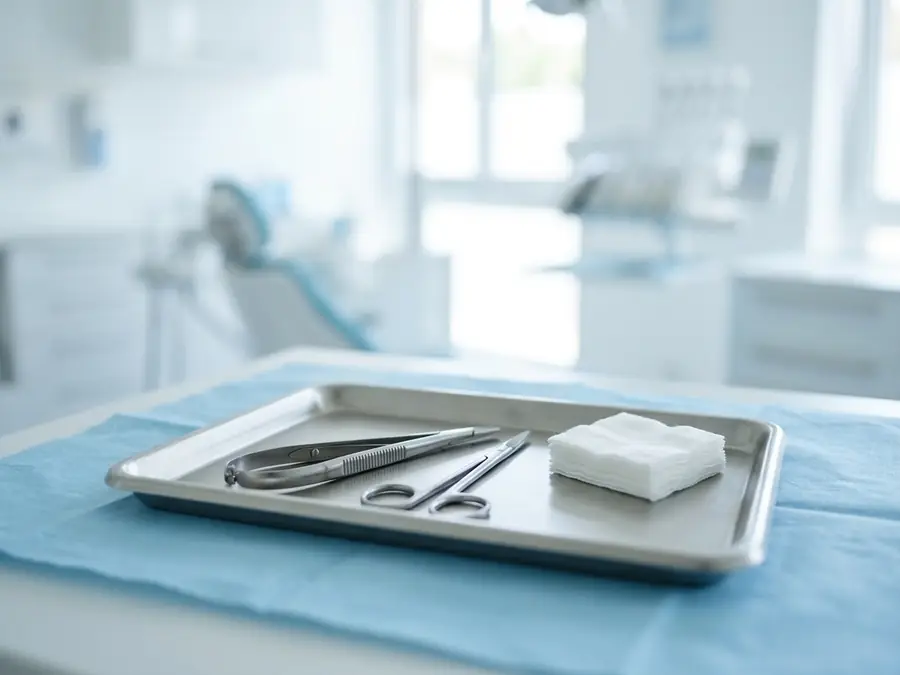
Not every extraction needs stitches. They are used after surgical extractions where the gum has been opened, such as an impacted wisdom tooth, when several neighbouring teeth are removed, or when it's important to control bleeding and keep the clot in place. Stitches hold the edges of the gum together so the wound heals more neatly. For the procedure itself, see wisdom teeth and tooth extraction in Beylikdüzü.
What to expect with each type of stitch
| Dissolvable stitches | Non-dissolvable stitches | |
|---|---|---|
| When do they come out? | Usually loosen or fall out on their own within 7–14 days | Mostly removed at a check-up after 7–10 days |
| Is a check-up needed? | If your dentist asks | Yes, an appointment to remove them |
| Does removal hurt? | Not removed | Quick; usually no anaesthetic needed, just a slight tugging feeling |
| If one comes out early | Usually fine if there's no bleeding | Usually fine if there's no bleeding; let your dentist know |
A stitch came out early or the wound opened: what to do
It's normal for the ends of dissolvable stitches to loosen within a few days and for some to fall out. If there's no bleeding and the edges of the wound have started to close, you usually don't need to do anything.
- If it bleeds, fold a clean piece of gauze, place it over the wound and bite on it firmly for 30 minutes without lifting it.
- If the bleeding doesn't stop, if there's a noticeable gap or if pain is increasing, call your dentist.
- Don't try to cut or pull out a loose or dangling stitch yourself; if it's poking you, your dentist can trim it.
Looking after the stitched area
- For the first 24 hours, don't rinse, spit or drink through a straw; it's important not to disturb the clot.
- From the next day, rinse gently with warm salt water after meals; let the water move around your mouth and then let it fall into the sink.
- Brush your other teeth as normal, and be very gentle with a soft brush around the stitches for a few days.
- Eat soft, lukewarm food for a few days and don't chew on that side.
- Stay off cigarettes for as long as you can, as smoking slows healing. See what smoking does to teeth and gums.
- Don't probe the stitches with your tongue or fingers.
We explain what to know about bleeding, swelling and eating in the first days in after a tooth extraction.
Is white tissue in the socket normal?
Two or three days after an extraction, a soft whitish-yellow layer may appear over the wound. This is usually healing tissue and is normal; it doesn't mean infection. If pain increases rather than easing over a few days, and there's a bad taste or smell and the socket looks empty, it may be a dry socket. See what is dry socket.
When to let your dentist know
- Bleeding that doesn't stop despite 30 minutes of pressure
- Pain that increases after the third day
- Increasing swelling, a fever or marked difficulty opening your mouth
- Numbness that lasts longer than a day
These are not common, but if you notice them, calling your dentist straight away makes healing easier.
Follow-up after extractions in Beylikdüzü
After an extraction at Dent32, we tell you in writing what type of stitches you have, when they will dissolve or be removed and when your check-up is. If anything worries you, just call.
Dent32 is at Barış Mah., Ginza Lavinya, E-5 Yanyolu No:30 D:179, 34520 Beylikdüzü, Istanbul and is open seven days a week. To book, call or WhatsApp +90 555 011 33 68, or use our contact page. At the examination we share the findings, the options and the approximate cost in writing; you are under no obligation to start treatment afterwards.
Frequently asked questions
How many days after an extraction are stitches removed?
Non-dissolvable stitches are usually removed at a check-up after 7–10 days. Dissolvable stitches aren't removed; they loosen or fall out on their own within 7–14 days.
What if dissolvable stitches don't fall out?
If a stitch is still bothering you after two weeks, your dentist can easily remove it at a check-up; don't try to pull it out yourself.
A stitch fell out early. Is that a problem?
Usually not, if there's no bleeding and the edges of the wound have started to close. If it bleeds, press on gauze for 30 minutes; if it doesn't stop, call your dentist.
Does it hurt to have stitches removed?
Removing stitches is a simple procedure that takes a few minutes; it usually needs no anaesthetic and feels like a slight tug.
Can I brush my teeth with stitches?
Yes. Brush your other teeth as normal, be very gentle around the stitches with a soft brush for the first few days, and rinse gently with warm salt water from the next day.