Sedation and general anaesthesia for dental treatment: who needs it, where and how?
Most dental treatment is done with local anaesthetic alone: only the area being treated is numbed and you stay fully awake. Sedation or general anaesthesia may be considered for severe dental fear, very extensive treatment, young children with many cavities or patients with special needs. Because these methods need an anaesthesiologist and suitable equipment, they aren't carried out at every dental practice; who they suit and where they can be done is decided after an examination.
Local anaesthetic, sedation and general anaesthesia
| Method | Awareness | Who gives it? | Typical use |
|---|---|---|---|
| Local anaesthetic | Fully awake; only the area is numb | Dentist | Fillings, root canals, extractions, implants, scale and polish |
| Light or moderate sedation | Calm and drowsy; responds when spoken to | Anaesthesia team; some light methods under suitable conditions | Long or surgical procedures in anxious patients |
| Deep sedation and general anaesthesia | Asleep; no response to surroundings | Anaesthesiologist | Many treatments in a young child, patients with special needs, extensive surgery |
Local anaesthetic is usually given as well under sedation or general anaesthesia, which makes pain control afterwards easier.
Who is it considered for?
- People whose dental fear is too severe for treatment under local anaesthetic
- Young children who can't cooperate and need many teeth treated
- People with intellectual or physical special needs
- Long surgical procedures such as impacted teeth or several implants
- Some situations where local anaesthetic doesn't work well enough
The dentist doesn't decide alone: general health, medicines and previous experiences of anaesthesia are assessed together with the anaesthesia team.
Where is it done?
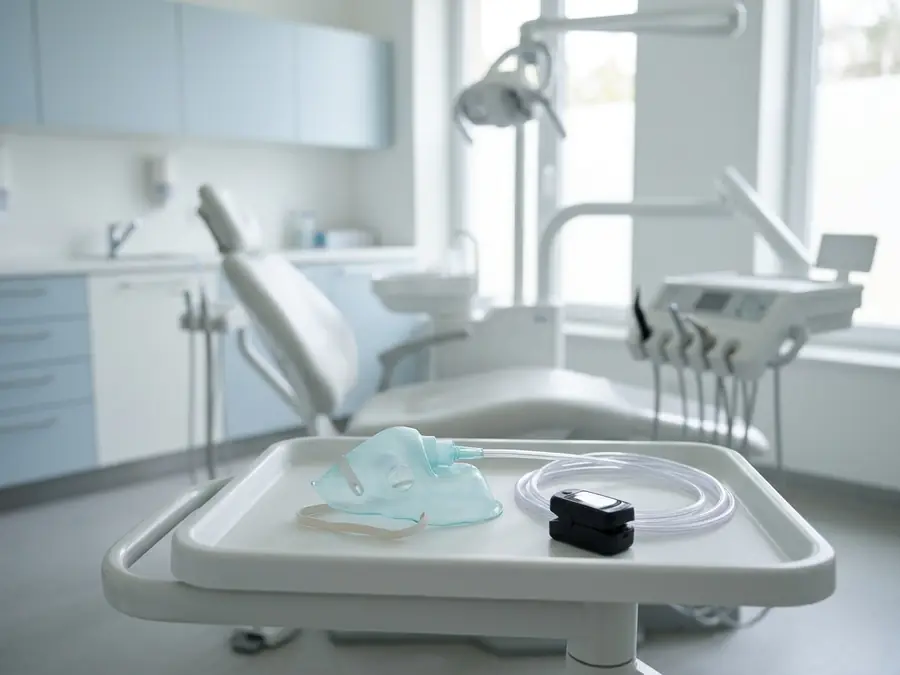
Sedation and general anaesthesia are given by a specialist anaesthesiologist in settings permitted by regulations, with equipment to monitor breathing and circulation and to handle emergencies. Not every dental practice has these facilities, so if treatment under sedation is needed, where it will take place is planned in advance.
Preparation and recovery
- Pre-anaesthetic assessment: chronic conditions, medicines and allergies are discussed.
- You'll need to avoid eating and drinking for some hours beforehand; the anaesthesia team will tell you how long.
- An adult escort is essential, and you mustn't drive that day.
- Rest on the day and the day after, avoiding heavy work.
- Children need close supervision for the first hours afterwards.
Other ways to reduce dental anxiety
Not every fear needs sedation. Using the first appointment just to meet and examine, explaining each step in advance, agreeing a “stop” signal and splitting long procedures into shorter visits help most patients. More in step-by-step treatment for anxious patients. How long numbness lasts is covered in how long dental numbness lasts.
How we plan it at Dent32
At our polyclinic in Beylikdüzü, the first conversation covers your anxiety and the scope of treatment, and we assess together whether local anaesthetic will be enough. If sedation or general anaesthesia seems necessary, we explain clearly under what conditions and where it could be done.
Initial consultation in Beylikdüzü
Dent32 Ağız ve Diş Sağlığı Polikliniği (Dent32 Dental Polyclinic) is at Barış Mah., Ginza Lavinya, E-5 Yanyolu No:30 D:179, 34520 Beylikdüzü, Istanbul and is open seven days a week. To book, call or WhatsApp +90 555 011 33 68, or use our contact page. At the examination we share the findings, the options and the approximate cost in writing; you are under no obligation to start treatment afterwards.
For clinic details, our dentists and the full list of treatments, visit Dent32, our dental practice in Beylikdüzü.
Frequently asked questions
Will I be fully asleep under sedation?
With light or moderate sedation you're drowsy and relaxed but still respond when spoken to. Being fully asleep is general anaesthesia, given by an anaesthesiologist.
When are children treated under general anaesthesia?
It's considered for young children who need many teeth treated and can't cooperate, or for children with special needs. A child-friendly approach is tried first, and the decision is made with the dentist, the family and the anaesthesia team.
Can I drive after sedation?
No. Don't drive or make important decisions on the day of sedation or general anaesthesia, and go home with an adult escort.