
My toothache went away on its own: has the problem gone too?
When a tooth that has been hurting for a while suddenly stops, it is a relief, and sometimes it really does mean that temporary sensitivity has passed. Sometimes, though, the pain stopping may show that the problem has moved to a different stage rather than ended. Which applies varies from person to person and cannot be told from the symptoms alone; an examination and, if needed, an X-ray clarify the condition of the tooth.
Why might the pain have gone away?
 Dr. Hüseyin AşcıFounding dentist, Dent32 Beylikdüzü
Pain going away is a relief, but on its own it does not show that the tooth has healed. If the pain lasted several days, I would like you to have the tooth checked once, even if it has stopped; the X-ray often explains why the pain went away.
Graduate of Istanbul University Faculty of Dentistry; works mainly on implants, All-on-4 and All-on-6, zirconia crowns and veneers. About Dr. Hüseyin Aşcı
| Possible reason | Explanation |
|---|---|
| Temporary sensitivity | Pain linked to a new filling, scaling, hot-cold sensitivity or gum irritation may ease with time |
| Medication | Painkillers or antibiotics may mask symptoms; pain can return when they are stopped |
| Pain from a nearby area | Pain from sinusitis, jaw muscles or the gum may pass when that condition settles |
| A change inside the tooth | If the nerve tissue inside the tooth loses its vitality, pain may not be felt for a while, but the problem may continue |
The last item surprises patients most: when the nerve tissue inside a tooth loses its vitality, the sensation of pain may fade. During this time, inflammation can develop quietly at the root tip and appear months later as swelling or a bump on the gum. See what is a dead tooth and a pimple-like bump on the gum.
If it eased with painkillers or antibiotics
Painkillers ease the symptom; antibiotics may temporarily suppress infection in some cases. But causes such as decay, a fracture or inflammation inside the tooth may not be removed by medication, which is why pain often returns when the medicine runs out. More: do antibiotics and painkillers cure toothache.
What is worth noting down?
- How many days did the pain last, and what made it worse (cold, heat, sweets, biting)?
- Did it wake you at night?
- After it stopped, did you notice discolouration, tenderness on biting or a bump on the gum?
- Which medicines did you take, at what dose and for how many days?
This information helps with diagnosis at the examination.
What is checked at the examination?
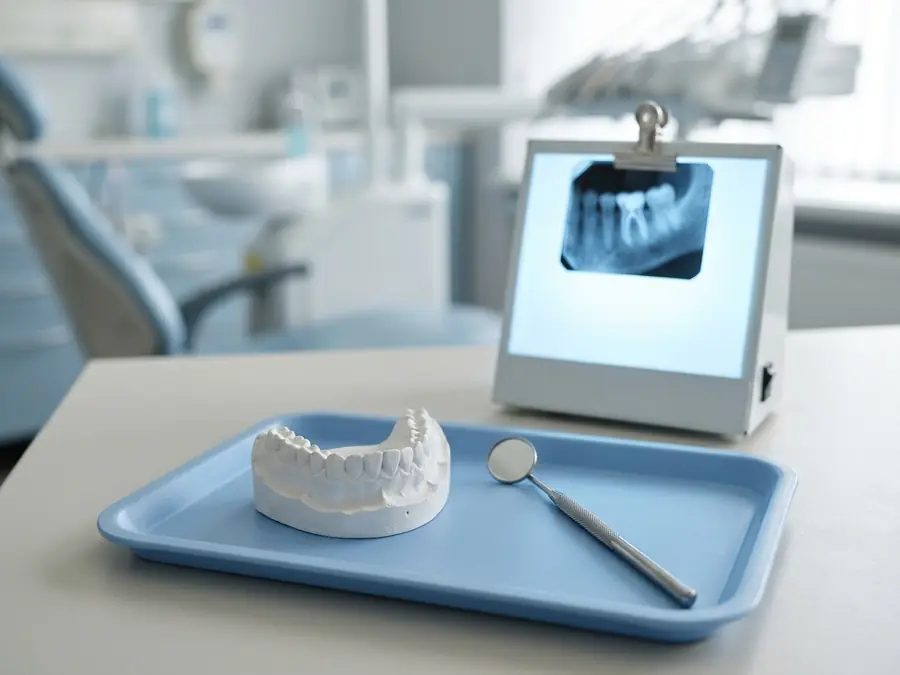
The dentist looks at the tooth, may assess its response with cold and bite tests, and may request an X-ray. The X-ray helps show decay that cannot be seen and changes at the root tip. Depending on the findings, options range from simple monitoring to a filling or root canal treatment. What is needed varies from patient to patient. See when is a root canal needed.
For a check-up
At Dent32 the findings and options are explained to you in writing at the examination; if no treatment is needed, a check-up interval is suggested.
Dent32 is at Barış Mah., Ginza Lavinya, E-5 Yanyolu No:30 D:179, 34520 Beylikdüzü, Istanbul and is open Monday to Saturday, 9:00–22:00. To book, call or WhatsApp +90 555 011 33 68, or use our contact page. At the examination we share the findings, the options and the approximate cost in writing; you are under no obligation to start treatment afterwards.
Frequently asked questions
If toothache goes away on its own, do I still need a dentist?
If it was brief, mild sensitivity, perhaps not; if pain that lasted several days, woke you at night or was suppressed with medication has gone, a check-up helps find the cause.
What does it mean when toothache suddenly stops?
It may be that irritation has settled, or it may be linked to the nerve tissue inside the tooth losing its vitality. An examination and X-ray tell them apart.
Can toothache that went away with antibiotics come back?
In some cases yes, because antibiotics may not remove causes such as decay or inflammation inside the tooth.
Can a tooth that does not hurt show a problem on an X-ray?
Yes, some changes at the root tip can progress without pain and be noticed on a routine X-ray.