
Front teeth that don't meet (open bite): causes and treatment in Beylikdüzü
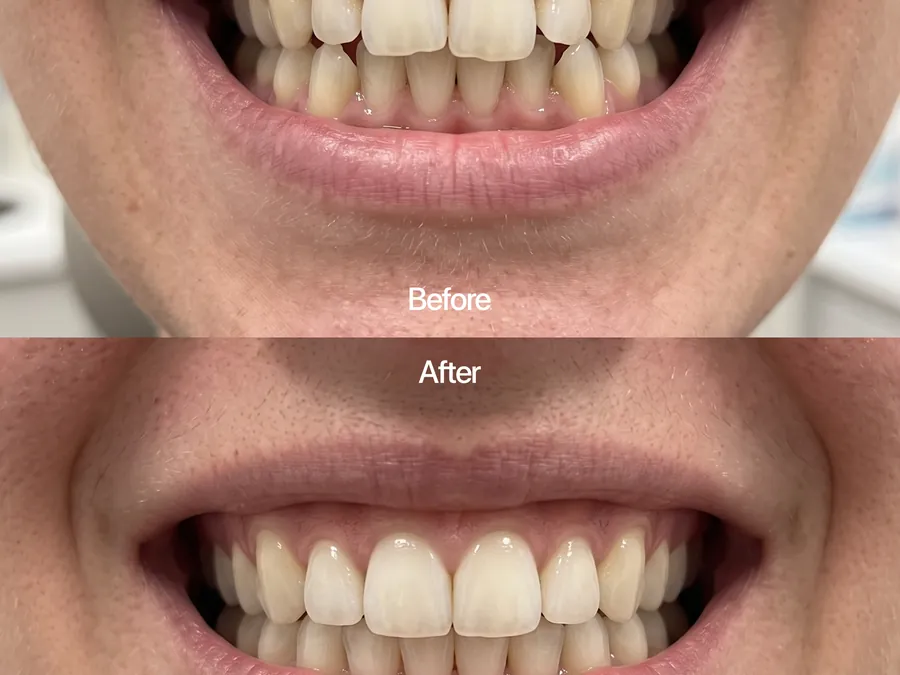
If your back teeth touch when you close your mouth but there is a gap between your front teeth, this is called an anterior open bite. Some people mistake it for jawbone loss, but it is usually an orthodontic issue related to the position of the teeth or jaws. Orthodontics is at the centre of the work of Dr. Hüseyin Aşçı, founder of Dent32 in Beylikdüzü.
How do you recognise an open bite?
- A vertical gap between the upper and lower front teeth when the mouth is closed.
- Difficulty biting through a sandwich, pizza or pasta with the front teeth.
- A lisp on sounds like S and Z, or the tongue showing between the teeth.
- Mouth breathing and a dry mouth.
- Wear on the back teeth or tired jaw joints, because the load falls on fewer teeth.
An open bite can also affect the side teeth (lateral open bite).
Causes
| Cause | Explanation |
|---|---|
| Thumb or dummy sucking | A habit that continues past age 3–4 pushes the front teeth forward and up |
| Tongue thrust | The tongue pressing against the front teeth when swallowing or speaking |
| Mouth breathing | Adenoids, allergies or a blocked nose change tongue and jaw posture |
| Skeletal pattern | Excess vertical growth of the jaws; often runs in families |
| Jaw joint problems | Some joint conditions can change the bite later in life |
In children: early intervention
In children, habits are the most common cause, and treatment is much easier if it's caught early. Stopping thumb sucking, exercises to retrain tongue posture and, if needed, a tongue-guard appliance are used. If the child breathes through the mouth, assessment together with an ENT doctor is important. This is why a first orthodontic check at age 7 is recommended; see early orthodontics for children.
Treatment in adults
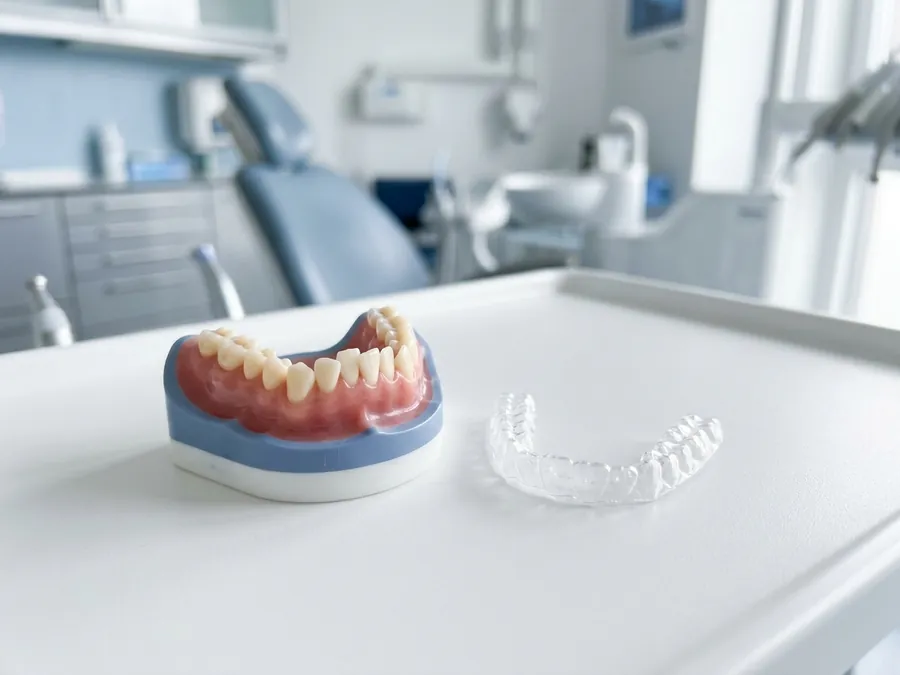
- Clear aligners: Can work in some mild to moderate open bites caused by the teeth (clear aligners and braces).
- Fixed braces: Give more predictable results for complex tooth movements; supported by mini-screws when needed.
- Orthodontics with jaw surgery: For a marked skeletal open bite, orthodontics is planned together with jaw surgery, and the patient is also referred to a maxillofacial surgeon.
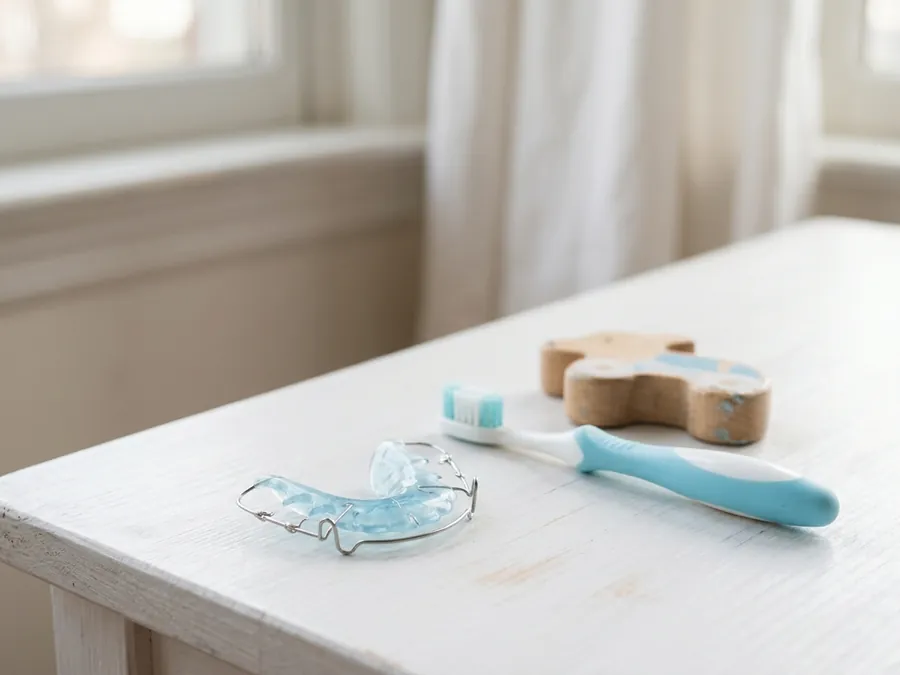
If habits such as tongue thrust continue, an open bite can relapse after treatment, so the retention phase is especially important (retainers after orthodontics). Adult orthodontics is covered in adult orthodontics.
Assessment at Dent32
At the examination we look at the bite, tongue and lip movements and photos, plus X-rays and an intraoral scan if needed. We present the options with timing and cost in a written plan. Dent32 is at Barış Mah., Ginza Lavinya, E-5 Yanyolu No:30 D:179, 34520 Beylikdüzü, Istanbul; to book, call +90 555 011 33 68 or write to us.
Frequently asked questions
My lower teeth don't touch my upper teeth. Is that bone loss?
Usually not; it is generally a bite problem caused by the position of the teeth or jaws. However, teeth drifting because of advanced gum disease can also create gaps. An examination and X-ray tell the difference.
Does an open bite correct itself?
In young children it can if the habit stops early. In adults it usually doesn't.
Can it be treated with clear aligners?
In some cases caused by the teeth, yes. For marked skeletal open bites, aligners alone may not be enough.