Impacted canine (eye tooth): causes, diagnosis and bringing it into place with orthodontics
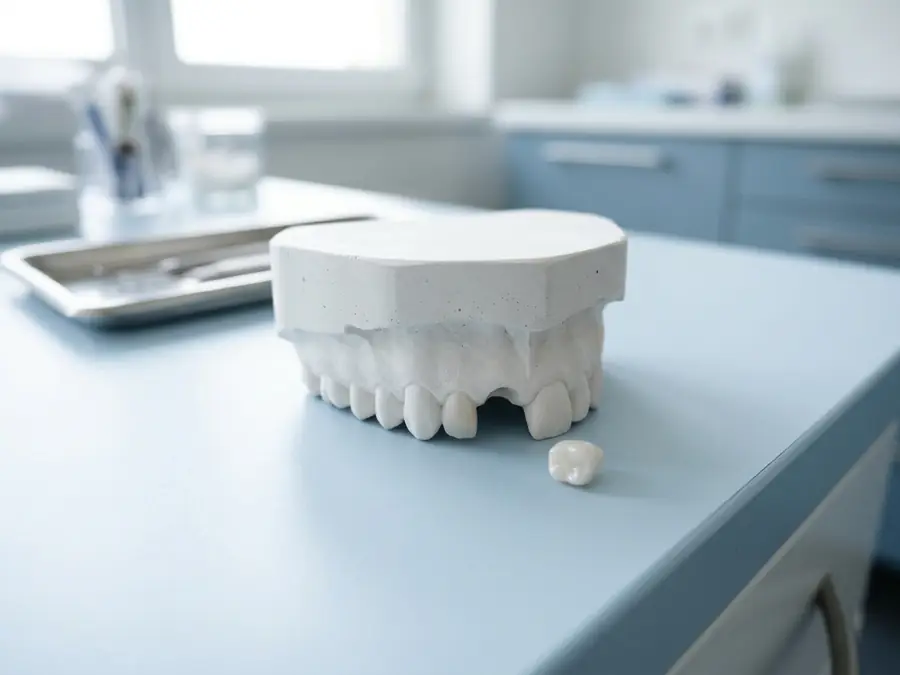
After wisdom teeth, the tooth most often impacted is the upper canine (eye tooth), affecting roughly 1–2% of people. Because the canine forms the corner of the smile and plays an important role in chewing, an impacted canine is usually not extracted; orthodontic treatment tries to bring it into place. If it's spotted early, a simpler intervention can help it come in by itself. That's why dental check-ups between ages 10 and 12 matter.
Why canines become impacted
- Lack of space in the jaw
- The tooth developing in the wrong direction, especially towards the palate
- The baby canine not falling out on time
- A small or congenitally missing lateral incisor (the canine uses this tooth's root as a guide). See congenitally missing teeth.
- Family tendency
How it's spotted
- The baby canine still in place after age 13–14
- One canine has come in but the other hasn't after more than 6 months
- A hard bump on the palate or lip side
- The lateral incisor tilting or shifting
Diagnosis is made on a panoramic X-ray; a CT scan is usually needed to see the tooth's exact position and its effect on neighbouring roots. See dental X-rays and CT scans.
What happens if it isn't treated?
An impacted canine usually doesn't hurt, but as it tries to come through it can press on and dissolve the roots of the neighbouring incisors. This can progress unnoticed and lead to loss of the incisor. Cysts can also develop around teeth that stay impacted for a long time. See tooth cysts.
Early intervention: removing the baby canine
Between about 10 and 13, if the permanent canine's direction isn't too far off, removing the baby canine can help the permanent tooth correct its path and come in by itself. An appliance to create space in the jaw may also be used. This doesn't work in every case, but when it does, surgery isn't needed. See early orthodontics for children, when baby teeth fall out.
Surgical exposure and orthodontic traction
- Orthodontic treatment starts and space is created for the canine.
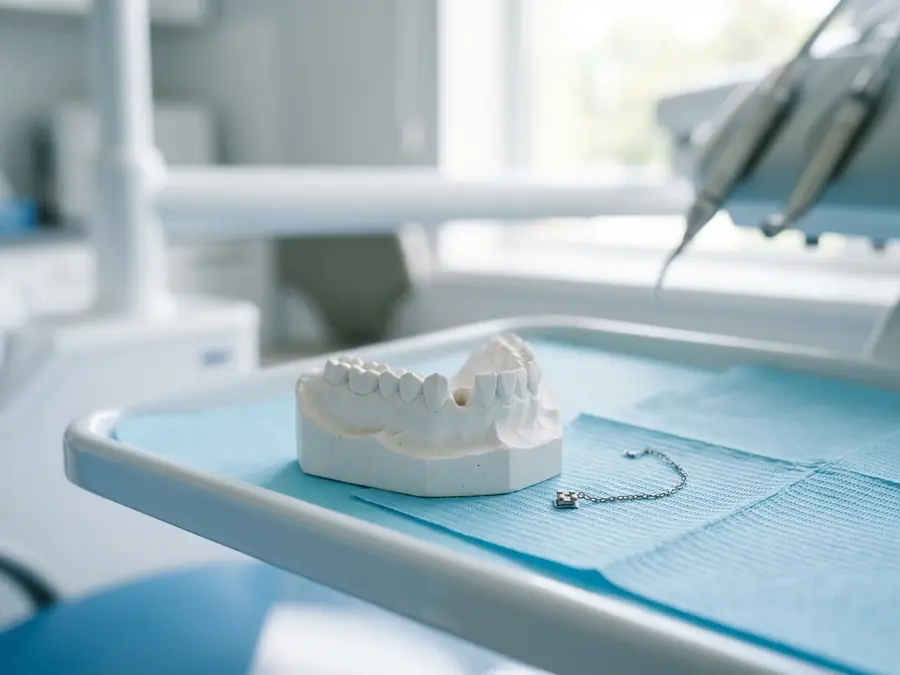
- Under local anaesthetic, a small surgical procedure uncovers the tooth and a small attachment is bonded to it.
- Using a fine chain or wire attached to it, the tooth is slowly pulled into place over several months.
- Once the tooth is in the arch, it's aligned with orthodontic treatment.
The whole process usually takes 1.5–2.5 years depending on the case. Retention is needed afterwards to keep the teeth in place. See retention after orthodontics.
Impacted canines in adults
Orthodontic traction can also be tried in adults, but with age the chance of the tooth fusing to the bone rises and success becomes less likely. If the tooth is badly positioned or fused, it's extracted, and the gap is closed orthodontically or filled with an implant or bridge. If the baby canine is sound with a good root, it can be kept for many years. See orthodontics for adults, a single missing tooth.
Assessment in Beylikdüzü
At Dent32 we follow canine position at children's and adults' check-ups, assess with X-rays and CT scans if in doubt, and explain the options in writing. For cases needing surgery we plan together with the relevant specialty. See orthodontics in Beylikdüzü.
Dent32 Ağız ve Diş Sağlığı Polikliniği (Dent32 Dental Polyclinic) is at Barış Mah., Ginza Lavinya, E-5 Yanyolu No:30 D:179, 34520 Beylikdüzü, Istanbul and is open seven days a week. To book, call or WhatsApp +90 555 011 33 68, or use our contact page. At the examination we share the findings, the options and the approximate cost in writing; you are under no obligation to start treatment afterwards.
For clinic details, our dentists and the full list of treatments, visit Dent32, dental polyclinic in Beylikdüzü.
Frequently asked questions
Will an impacted canine come in by itself?
Early on, removing the baby canine and creating space can help it come in by itself. At older ages and with badly positioned teeth, surgical exposure and orthodontic traction are usually needed.
Should an impacted canine be extracted?
Usually not; the canine is an important tooth and orthodontics tries to bring it into place. Very badly positioned teeth or teeth fused to bone may be extracted.
At what age should it be treated?
Diagnosis around age 10–12 is ideal, when simple interventions work best. Orthodontic traction can also be done in adolescence and adulthood, but success becomes less likely with age.