When can you smoke after a dental implant? E-cigarettes, shisha and healing
After an implant, the later you start smoking again the better: don't smoke at all for the first 72 hours, stop for the first two weeks, and ideally quit for the first 2–3 months while the implant fuses with the bone. Smoking reduces blood flow, which slows both wound healing and the implant's integration into the bone. This article gives smokers a practical plan for before and after implant surgery.
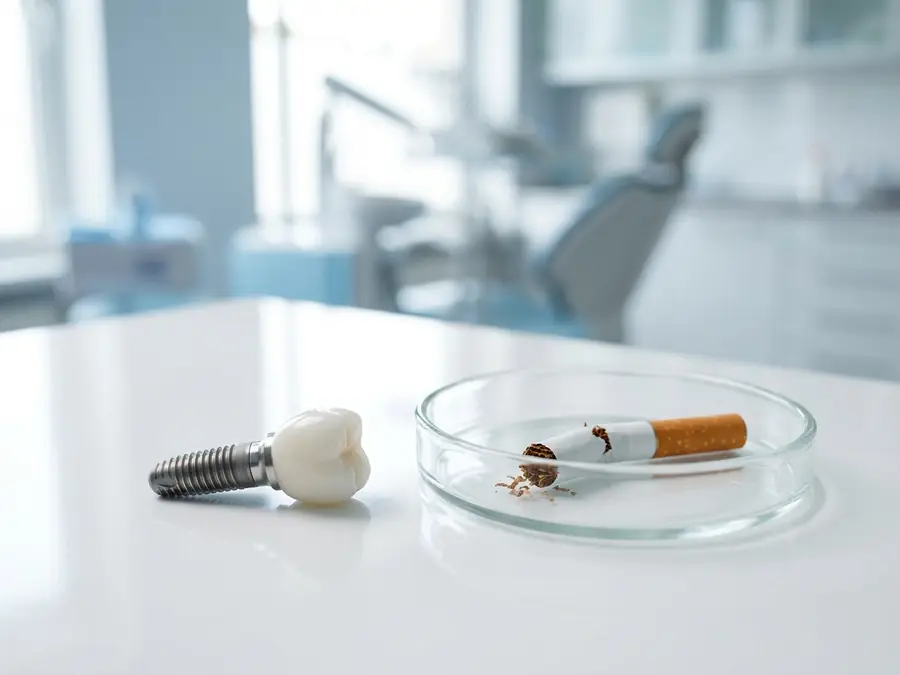
How does smoking affect an implant?
An implant succeeds when the bone fuses to its surface (osseointegration). Nicotine narrows blood vessels, and the carbon monoxide in smoke reduces the oxygen reaching the tissues. As a result:
- the stitched area heals more slowly and the risk of infection rises;
- the implant may integrate with the bone more slowly, or not at all;
- in the long term, inflammation and bone loss around the implant (peri-implantitis) are more common.
Studies have found clearly higher implant failure rates in smokers than in non-smokers. That doesn't mean smokers can't have implants, but the risk needs to be understood and reduced. See can smokers have dental implants?
A smoking timeline
| Period | Advice | Why? |
|---|---|---|
| 1–2 weeks before surgery | Stop, or cut down significantly | Blood supply to the tissues improves |
| First 72 hours | Don't smoke at all | The blood clot and early healing are most vulnerable |
| First 2 weeks | Don't smoke | Until the stitches are out and the wound has closed |
| First 2–3 months | Quit if you can | The period when the implant fuses with the bone |
| After the final tooth is fitted | Cut down and keep up check-ups | To lower the risk of peri-implantitis |
Are e-cigarettes, heated tobacco and shisha less harmful?
E-cigarettes and heated tobacco products also contain nicotine, which narrows blood vessels. With shisha, the amount of smoke and the length of exposure are usually greater than with cigarettes. The sucking action can also dislodge the blood clot in the wound in the first days. So the same rules apply to these products during healing.
If you can't stop smoking, how to reduce the risk
- Tell your dentist honestly how much you smoke before surgery; the plan is made accordingly.
- Don't drink through a straw or spit in the first days; sucking and spitting can disturb the clot.
- Rinse your mouth with water after smoking and clean the implant area as your dentist shows you.
- Your GP or a stop-smoking service can help with support such as nicotine patches.
- Keep up check-ups after the final tooth is fitted; inflammation around an implant is easier to treat when caught early.
We cover general care in the first days in the first days after an implant.
Planning implants for smokers at Dent32
At the examination we assess smoking, gum health and bone together. If necessary, gum treatment comes first; the number of implants and the healing time are planned with this in mind. The process is explained step by step in implant treatment in Beylikdüzü.
Dent32 is at Barış Mah., Ginza Lavinya, E-5 Yanyolu No:30 D:179, 34520 Beylikdüzü, Istanbul and is open seven days a week. To book, call or WhatsApp +90 555 011 33 68, or use our contact page. At the examination we share the findings, the options and the approximate cost in writing; you are under no obligation to start treatment afterwards.
Frequently asked questions
How many days after an implant can I smoke?
Don't smoke at all for at least 72 hours; waiting until the stitches are out, about two weeks, is safer. Stopping for the first 2–3 months while the implant integrates improves the chance of success.
Can smoking make an implant fail?
Smoking makes it harder for the implant to fuse with the bone and increases the risk of losing it. Not every smoker loses an implant, but the risk is higher than for non-smokers.
Can I vape after an implant?
E-cigarettes also contain nicotine, which affects healing. The rules for cigarettes during healing apply to e-cigarettes too.
Does shisha harm implants?
Yes. Exposure to smoke is usually longer with shisha, and the sucking action can put strain on the wound in the first days. Avoid it during healing.