My filling or crown feels high: what if that tooth touches first when I bite?
After a filling or crown, it is common to feel, once the numbness wears off, that one tooth touches before the others when you close. While numb, you cannot fully feel your bite, so a small high spot may go unnoticed. That high spot can cause pain when chewing, sensitivity or jaw fatigue. Rather than waiting for it to settle, showing it to your dentist is usually more appropriate, and the adjustment is often quick. The cause of the symptoms and what to do vary from person to person.
How does a high filling or crown feel?
- One tooth touching first when you close, a feeling that something is in the way
- Pain or aching in that tooth when chewing
- Tenderness on biting, sometimes sensitivity to cold too
- Tiredness in the jaw muscles or joint, sometimes pain in the opposing tooth
These symptoms can also have other causes, such as temporary sensitivity after a filling or a cracked tooth. See pain after a filling and cracked tooth syndrome.
Why does it happen?
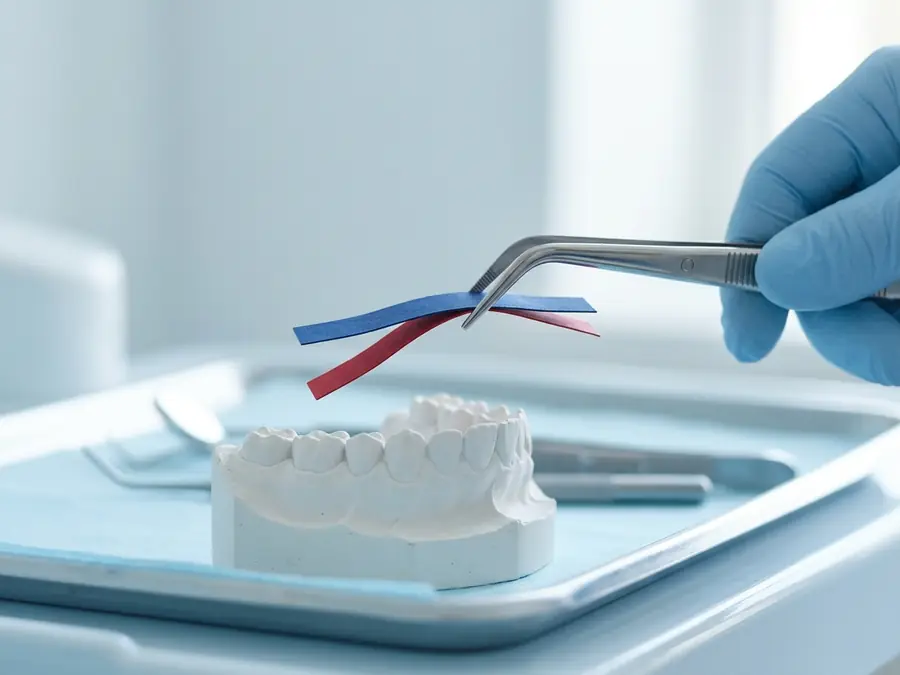
When placing a filling or crown, the dentist checks the bite with thin articulating paper. But while numb, the patient may not close with full force or in their usual position, and numb lips and tongue change the sensation. So a small high spot may not be noticed at the time and may appear once the numbness wears off.
Will it settle by itself?
Very small differences sometimes become comfortable within a few days. A clear high spot, however, puts extra load on that tooth and the opposing tooth with every bite; this may lead to inflammation around the tooth, prolonged sensitivity or tired jaw muscles. So if the feeling does not ease within a few days, seeing your dentist is usually better than waiting.
How is it adjusted?
 Dr. Hüseyin AşcıFounding dentist, Dent32 Beylikdüzü
It is hard to feel your bite properly while numb, so if a day or two later something feels high, do drop by the clinic. A bite adjustment usually takes a few minutes and helps keep the tooth from being overloaded unnecessarily.
Graduate of Istanbul University Faculty of Dentistry; works mainly on implants, All-on-4 and All-on-6, zirconia crowns and veneers. About Dr. Hüseyin Aşcı
- The dentist marks the point that touches first with coloured paper.
- The excess is removed by lightly smoothing the surface of the filling or crown.
- Side-to-side movements and chewing positions are checked too.
- The surface is polished.
This usually does not need anaesthetic and takes little time. Polishing after adjusting a crown is important. For other symptoms after a crown, see sensitivity after a crown.
At Dent32
At Dent32 a short check-up appointment is given for a high-feeling filling or crown; the bite is rechecked once the numbness has gone.
Dent32 is at Barış Mah., Ginza Lavinya, E-5 Yanyolu No:30 D:179, 34520 Beylikdüzü, Istanbul and is open Monday to Saturday, 9:00–22:00. To book, call or WhatsApp +90 555 011 33 68, or use our contact page. At the examination we share the findings, the options and the approximate cost in writing; you are under no obligation to start treatment afterwards.
Frequently asked questions
Will a high filling settle on its own?
You may get used to very small differences; with a clear high spot the tooth takes extra load, so having it adjusted is usually more appropriate.
Can a high filling cause pain?
It can cause pain and tenderness when chewing and biting, and jaw fatigue. Similar symptoms can have other causes; an examination tells them apart.
Do I need anaesthetic for a bite adjustment?
Usually not; it is quick.
Will a high crown be remade?
Often a small adjustment of the surface is enough. Other options may be discussed for marked mismatches; this varies from person to person.