
Clear aligners or braces? The real differences between them
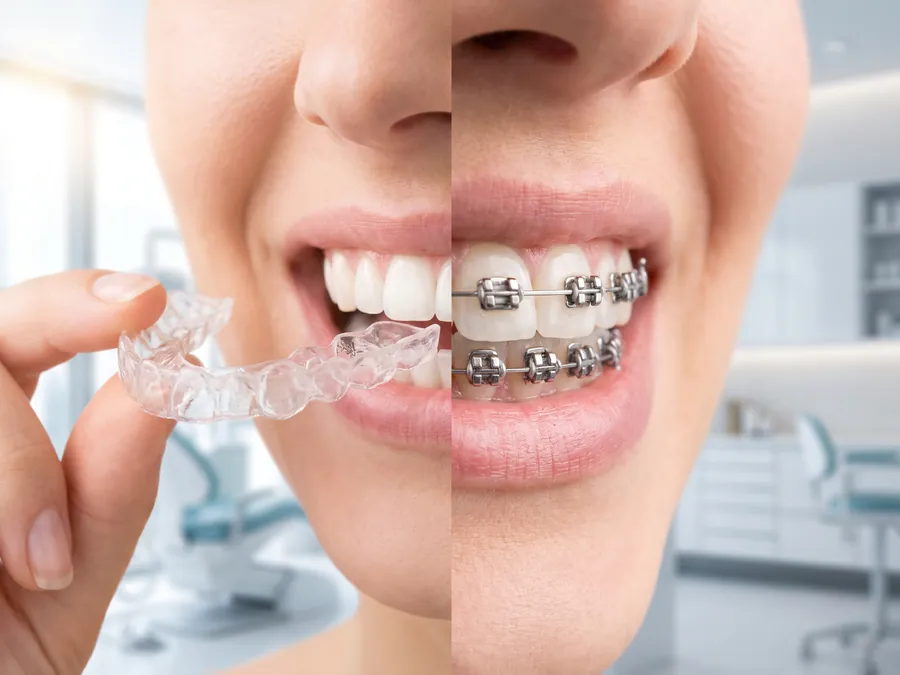
Clear aligners and fixed braces are two orthodontic methods for straightening teeth; both are effective, but they differ in appearance, the discipline they require and the cases they suit.
What are the key differences?
| Feature | Clear aligners | Fixed braces |
|---|---|---|
| Visibility | Almost invisible | Visible (clear brackets are an option) |
| Removability | Removed for eating and brushing | Fixed; removed by the orthodontist |
| Patient compliance | Must be worn 20–22 hours a day | Doesn't depend on the patient wearing them |
| Oral hygiene | Brushing is easy | Brackets need extra care |
| Food restrictions | Few, since aligners come out | Avoid hard and sticky food |
| Complex cases | Can be limited | Wider control of tooth movement |
When are braces the better choice?
Clear aligners have improved a great deal and work well in many cases. Even so, fixed braces are more predictable in some situations:
- Severe crowding or cases that require extractions
- Cases needing significant vertical tooth movement
- Skeletal problems arising from the jaw relationship
- Patients who don't think they can wear aligners for the recommended hours
Is the treatment time different?
For cases of similar difficulty, the two methods usually take a similar time. What determines duration is not the method but how far, and in which direction, the teeth need to move.
Mild cases can be completed in a few months, while comprehensive treatment can take one to two years. With aligners, the most common cause of delay is not wearing them long enough.
How do they compare for pain and comfort?
With both methods, a feeling of pressure for a few days after a new aligner or wire adjustment is normal. With fixed braces, brackets can rub the cheeks and lips and cause sores in the first weeks; orthodontic wax helps. Aligners cause less of this irritation.
What happens after treatment?
Teeth tend to drift back towards their old positions. That's why both methods end with a retention phase: a thin wire bonded behind the teeth, a clear retainer worn at night, or both.
Neglecting the retainer is the most common reason results deteriorate after orthodontics.
What affects the cost?
| Factor | Explanation |
|---|---|
| Case complexity | Amount of tooth movement needed and number of aligners |
| Treatment length and number of visits | Longer treatment needs more appointments |
| Aligner system / bracket type | Metal, clear brackets or different aligner systems |
| Retainers | The retention plan after treatment |
Frequently asked questions
Do aligners affect speech?
There may be a slight lisp for the first few days; most patients adapt quickly.
Can I eat with aligners in?
No. Take them out for anything other than water, then brush and put them back in.
Can adults have orthodontic treatment?
Yes. As long as gums and bone are healthy, age alone is not a barrier.
Which is faster, braces or aligners?
For similar cases the times are close. With aligners, the duration depends largely on wearing them consistently.