
How to relieve toothache: what to do at home, what to avoid and when it's urgent
You can ease toothache temporarily at home: a suitable painkiller taken as directed on the leaflet, rinsing with warm salt water, cold on the outside of the cheek if it's swollen, and lying with your head raised all help. But none of these removes the cause; decay, nerve inflammation or an abscess can only be treated by a dentist. This article covers what is safe to do at home, what to avoid and when to seek help straight away.
What you can safely do at home
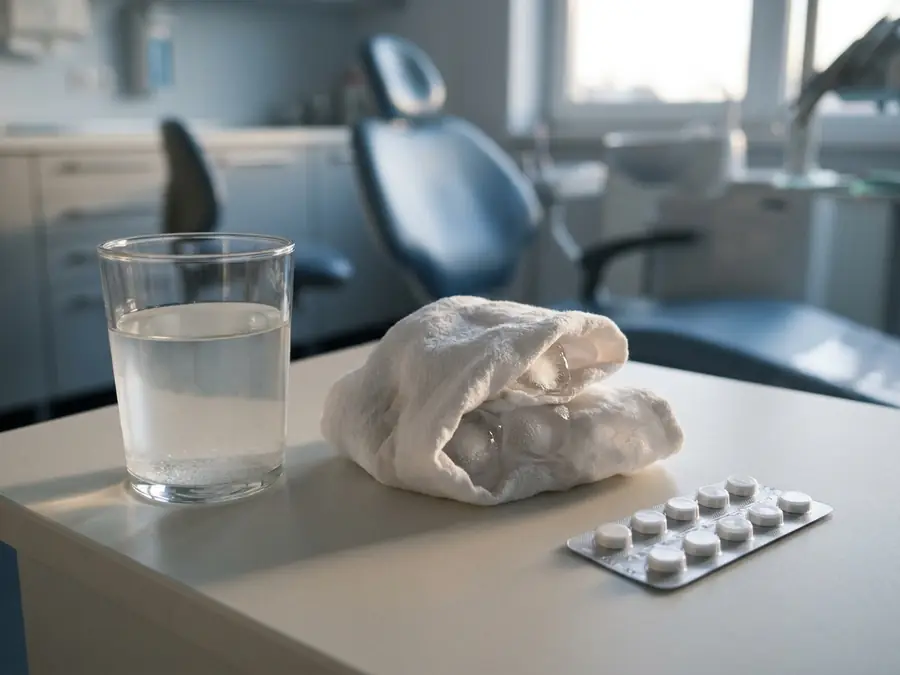
- Painkiller: take a painkiller you have used before without problems, without exceeding the dose on the leaflet. If you have stomach, kidney or heart problems, take blood thinners or are pregnant, ask a pharmacist or doctor which medicine is suitable first.
- Warm salt water: add half a teaspoon of salt to a glass of warm water and rinse gently; it clears away food debris.
- Floss: food trapped next to the painful tooth can make pain worse; remove it gently.
- Cold: if your cheek is swollen, wrap ice in a cloth and apply it to the outside for 10–15 minutes at a time.
- Head raised: propping your head up on a pillow at night can reduce throbbing.
What not to do
- Putting aspirin on the tooth or gum: it causes a chemical burn in the mouth.
- Hot compresses on the cheek: if there is infection, they can help swelling spread.
- Antibiotics on your own: antibiotics don't relieve pain from nerve inflammation, and unnecessary use encourages resistance. More: do antibiotics cure toothache?
- Alcohol or long-term clove oil: they can irritate the gums and mask the problem.
- Cancelling your appointment because the pain stopped: pain can stop when the nerve dies, while the infection carries on quietly.
What the type of pain tells you
| Type of pain | Possible cause |
|---|---|
| A twinge with cold or sweet things that fades in seconds | Decay, exposed root surface, sensitivity |
| Long-lasting throbbing that gets worse with heat and wakes you at night | Nerve inflammation (pulpitis); often needs root canal treatment |
| Pain on biting, the tooth feeling 'longer' | Inflammation at the root tip, cracked tooth |
| An ache in several upper back teeth that worsens when you bend down | Possibly sinusitis. See can sinusitis cause toothache? |
| Pain spreading to the ear or temple | Referred pain. See can toothache spread to the ear? |
See sensitivity to hot and cold and signs and stages of tooth decay.
When to seek help without waiting
- Swelling growing in the face, under the eye or in the neck
- Fever, feeling unwell
- Difficulty swallowing or breathing (go to a hospital emergency department immediately)
- Pain that painkillers don't control and that keeps you awake
- A broken or loosened tooth after an injury
For nights and weekends: toothache at night or at the weekend, dental abscess and facial swelling.
Toothache in Beylikdüzü: Dent32
Dent32 is open seven days a week. If you're in pain, message or call us and we'll try to make room to see you the same day. At the examination we find the source of the pain and, if needed, do the first step to relieve it in the same session.
Dent32 is at Barış Mah., Ginza Lavinya, E-5 Yanyolu No:30 D:179, 34520 Beylikdüzü, Istanbul and is open seven days a week. To book, call or WhatsApp +90 555 011 33 68, or use our contact page. At the examination we share the findings, the options and the approximate cost in writing; you are under no obligation to start treatment afterwards.
Frequently asked questions
What relieves toothache fastest?
Taking a suitable painkiller at the leaflet dose and rinsing with warm salt water gives temporary relief. The cause can only be treated by a dentist.
Will antibiotics help my toothache?
Antibiotics don't relieve pain caused by nerve inflammation; they are only given when a dentist decides they are needed, for example for spreading infection. Don't take antibiotics on your own.
Does toothache go away by itself?
Sometimes, but that often means the nerve has died. The infection can progress quietly into an abscess, so you still need an examination.
What should I do about toothache at night?
Take a painkiller, lie with your head raised and don't use hot compresses. If you have spreading facial swelling, fever or difficulty breathing, go to a hospital emergency department; otherwise see your dentist the next day.