

Teething in babies: signs, order of teeth, how to soothe and caring for first teeth
A baby's first tooth usually appears around six months, most often one of the lower front teeth; anywhere between 4 and 12 months is considered normal. Dribbling, putting hands and toys in the mouth, fussiness and swollen gums are common signs. High fever, diarrhoea or a cough should not be put down to teething; ask your paediatrician. Start brushing as soon as the first tooth appears.
In what order do baby teeth come in?
| Teeth | Approximate age |
|---|---|
| Lower central incisors | 6–10 months |
| Upper central incisors | 8–12 months |
| Lateral incisors | 9–16 months |
| First baby molars | 13–19 months |
| Canines | 16–23 months |
| Second baby molars | 23–33 months |
Timing varies between children; a few months early or late is usually fine. A child with no teeth at all by 18 months should be assessed. By about three years old, all 20 baby teeth are through.
Signs of teething
- More dribbling and a dribble rash on the chin
- Putting hands and toys in the mouth, wanting to bite
- Fussiness and disturbed sleep
- Swollen, red gums where a tooth is coming
- A slight temperature (below 38 °C)
A temperature of 38 °C or more, diarrhoea, vomiting, a cough or refusing all feeds should not be blamed on teething; see your paediatrician.
Safe ways to soothe
- Gently massaging the gum with a clean finger or damp gauze
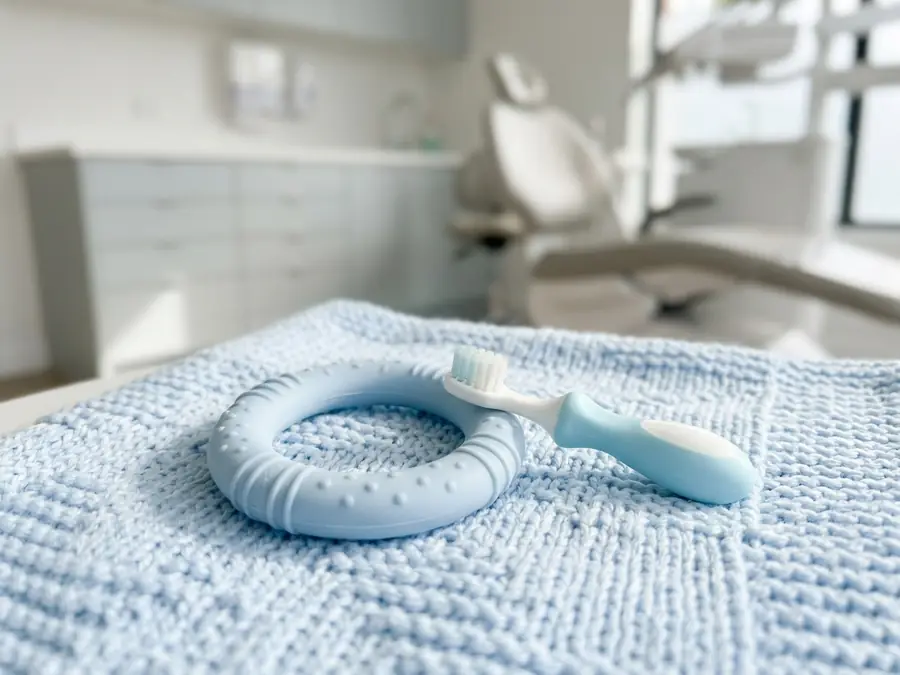
- A teething ring chilled in the fridge (not frozen)
- If pain is significant, a fever/pain medicine recommended by your paediatrician
Not recommended: amber teething necklaces and bracelets carry a risk of choking and swallowing. Numbing teething gels are not advised for young babies. Frozen, very hard teethers can damage the gums.
Care once the first tooth arrives
- Start brushing twice a day with a soft baby toothbrush as soon as the first tooth shows.
- Up to age three, use a smear of fluoride toothpaste the size of a grain of rice; from three to six, a pea-sized amount.
- Give only water after the last brush at night.
- Avoid putting your baby to sleep with a bottle. See bottle tooth decay.
When is the first dental visit?
The first visit is recommended when the first tooth appears, or by the first birthday at the latest. It's usually a short get-to-know-you and check: the teeth and gums are examined and parents get advice on brushing, diet and fluoride. More: when to take your child to the dentist for the first time, children's dentist in Beylikdüzü.
Children's check-ups at Dent32
Dent32 has a separate children's treatment room.
Dent32 is at Barış Mah., Ginza Lavinya, E-5 Yanyolu No:30 D:179, 34520 Beylikdüzü, Istanbul and is open seven days a week. To book, call or WhatsApp +90 555 011 33 68, or use our contact page. At the examination we share the findings, the options and the approximate cost in writing; you are under no obligation to start treatment afterwards.
Frequently asked questions
At what age does a baby's first tooth come through?
Usually around six months; anywhere between 4 and 12 months is normal. If there are no teeth by 18 months, an assessment is needed.
Does teething cause fever?
There may be a slight rise in temperature, but 38 °C or more should not be blamed on teething; ask your paediatrician.
When should I start brushing my baby's teeth?
As soon as the first tooth appears. Brush twice a day with a rice-grain smear of fluoride toothpaste.